2025년 12월 29일
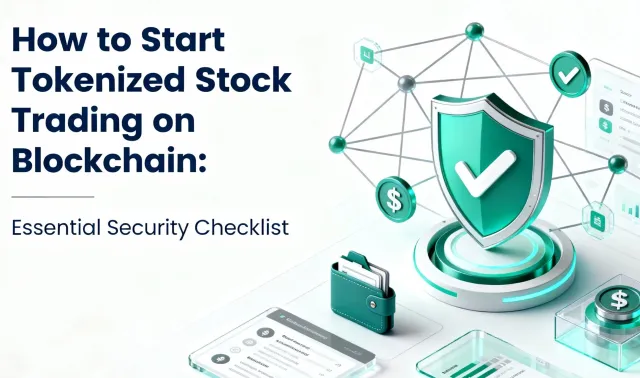
How to Start Tokenized Stock Trading on Blockchain: Essential Security Checklist
Tokenized stock trading lets you buy and trade digital representations of U.S. equities on blockchain with transparent settlement and often, fractional ownership. To get started securely, you’ll choose a compliant platform, pass identity checks, select a safe wallet setup, and verify that tokens are fully backed by real shares. This guide explains how tokenized stocks work, why they’re beneficial for international investors, how to choose a platform, and the exact security measures and steps to follow. We also highlight ToVest’s commitment to secure custody, global access, and commission-free trading, designed to bridge traditional finance and blockchain innovation for fractionalized U.S. equities.
Understanding Tokenized Stock Trading on Blockchain
Tokenized securities are digital representations of traditional financial assets, enabling trading and ownership on blockchain with the potential for fractional shares. This means an equity can be issued as a token governed by smart contracts that encode ownership and transfer rules, enabling programmable compliance and direct settlement on-chain. For a concise primer on the concept, see InnReg’s overview of tokenized securities.
At a high level, tokenization platforms source or custody the underlying stock, then mint tokens that mirror the real asset on a blockchain. Smart contracts govern transfer restrictions, corporate actions, and cap table logic; oracles can feed market data and verify asset backing; and compliant onboarding ensures only eligible, verified investors can trade. For a step-by-step look at this process, consult Rapid Innovation’s asset tokenization guide.
Key stakeholders and their roles:
Issuer/sponsor: Originates the tokenized stock and legal structure.
Licensed custodian: Holds the underlying securities in segregated accounts.
Transfer agent: Maintains official share records and links on-chain tokens to book-entry shares.
Broker-dealer/ATS: Provides compliant primary issuance and secondary trading venues (where applicable).
Smart contract developers/auditors: Design, test, and audit token logic and controls.
Oracle provider: Delivers price feeds and proof-of-reserve signals to the blockchain.
KYC/AML provider: Verifies investor identity and eligibility.
Insurer: Covers defined operational or custodial risks (if available).
Benefits of Blockchain Stock Trading for International Users
Blockchain-based stock trading can lower geographic and financial barriers for non-U.S. investors. With compliant platforms, you can access U.S. equities without a domestic brokerage, often with streamlined onboarding and 24/7 market access. Fractional ownership allows you to start with small amounts—aligned with ToVest’s mission to democratize access to U.S. stocks via fractional shares and commission-free trading.
Settlement can be near-instant, as blockchains confirm transfers without legacy intermediaries, and overall costs can be lower than traditional cross-border brokerage flows, as underscored in research on finance digitalization (IAEME Journal). Many platforms allow stablecoin funding to avoid FX frictions. Industry roadmaps also indicate rising demand for tokenized assets and improved liquidity as tokenization and interoperability mature (rapidinnovation.io).
Choosing a Blockchain Platform for US Stock Trading
When evaluating blockchain stocks trading platforms for U.S. equities, focus on regulation, asset backing, and transparency. Assess the platform’s regulatory status, audit history, KYC/AML controls, smart contract design, custody model, and whether it supports U.S. equities. Infrastructure and issuance solutions frequently referenced in the space include ToVest, Polymath, Securitize, and TokenMint; each follows a different approach to compliance, custody integrations, and secondary trading. Always verify that the platform uses licensed custodians and publishes clear evidence that tokens are fully backed by the underlying shares—ideally with independent attestations and on-chain proof-of-reserve oracles (Chainlink Education Hub).
Illustrative comparison criteria:
Regulatory posture and licenses (e.g., broker-dealer/ATS, transfer agent)
KYC/AML onboarding and ongoing monitoring
Custody and transfer agent arrangements; segregated accounts
Smart contract audits and published reports
Oracle integration and proof-of-reserve transparency
Fees, asset coverage, and international accessibility
Tip: Read platform disclosures carefully, confirm true asset backing, and prefer providers that publish regular audits and custodial attestations.
Legal and Regulatory Considerations Before Trading
Tokenized stocks can represent full share ownership (linked to a transfer agent and book-entry shares) or only price exposure. Review the legal terms to understand whether you hold beneficial ownership and how dividends and voting rights are handled.
All reputable platforms implement KYC (Know Your Customer) and AML (Anti-Money Laundering) procedures to verify identity, source of funds, and eligibility before you can trade, and they maintain ongoing screening to meet regulatory obligations (Webisoft RWA Guide). Before starting, consult local counsel to address securities classification, reporting, and tax (including capital gains) in your jurisdiction. Your protections and duties vary depending on whether the venue is fully regulated or offshore, and whether you opt for a custodial versus decentralized model.
Setting Up Your Account and Digital Wallet Securely
A digital wallet for tokenized stocks is a secure application that holds the tokens representing your equities and manages transactions using private keys. You can choose:
Custodial wallets: The platform or custodian holds keys, simplifying recovery and compliance but placing trust in the provider.
Self-custody wallets: You control the keys for maximum sovereignty; you must protect seed phrases and device security.
Account setup best practices:
Complete KYC/AML: Provide government ID and proof of address; confirm any additional suitability checks.
Pick your wallet model: Custodial for convenience and recovery; self-custody (ideally with a hardware wallet) for control.
Secure setup: Back up your seed phrase offline (never digitally), enable 2FA, use unique passwords, and bookmark official URLs to avoid phishing.
Final checks before funding: Verify the platform’s domain and contract addresses; confirm audit reports; review custody/attestation disclosures.
Implementing Essential Security Measures for Tokenized Stock Trading
Robust controls protect against smart contract flaws, fraudulent tokens, phishing, and platform failures. Use the checklist below as a quick preview, then review the details in each subsection.
Security measure | Why it matters
Smart contract audits | Identifies and resolves code vulnerabilities before attackers can exploit them.
Licensed custody and transfer agent | Ensures tokens are backed by real, segregated shares with clear rights.
KYC/AML with whitelisting | Blocks illicit activity and enforces who can hold/trade the token.
Oracles and proof of reserve | Confirms real-time prices and ensures that minted tokens match assets actually held.
Incident response and insurance | Defines recovery for lost keys or breaches and cushions operational risks.
Continuous monitoring | Detects fraud or manipulation and validates supply, addresses, and attestations over time.
Smart Contract Audits and Hardening
Smart contracts are self-executing programs that govern token logic, ownership rights, and transfer rules on-chain. Most tokenized equity contracts use Solidity and secure development frameworks like Hardhat or Foundry, followed by formal audits to identify issues (Coinmonks checklist for tokenization platforms on Medium). Require third-party reviews from reputable firms (e.g., Trail of Bits, Halborn, CertiK, OtterSec), examine published reports, and confirm fixes before you trade.
Custody and Transfer Agent Best Practices
In custodial models, licensed institutions hold the underlying shares in segregated accounts; in self-custody models, you hold the token keys but still rely on custodial evidence that tokens are backed. Transfer-agent-led structures tie on-chain tokens to traditional book-entry shares so that fungibility, dividends, and voting rights are preserved (TD Securities deep dive). Favor platforms like ToVest with independent custodians, transparent attestations, and clear asset segregation.
KYC/AML Compliance and Whitelist Enforcement
KYC/AML encompasses identity verification, sanctions screening, and ongoing monitoring to deter fraud, meet regulatory obligations, and ensure only eligible investors can access tokenized securities. In practice, investors complete verification, are added to a whitelist, and smart contracts can restrict transfers to approved wallets only, enforcing compliance at the protocol level (Webisoft RWA Guide). This reduces the risk of illicit flows and strengthens investor protection.
Use of Oracles and Proof of Reserve Verification
A blockchain oracle securely delivers real-world data—such as equity prices, corporate actions, or custody attestations—onto the blockchain. Proof of Reserve systems help ensure that token supply does not exceed the real shares held by custodians, preventing unbacked minting; Chainlink describes how PoR can enforce asset-backing guarantees for tokenized stocks (Chainlink Education Hub). Choose platforms with transparent oracle feeds and published, independently verified custodial proofs.
Incident Response Planning and Insurance
Well-run platforms document how they handle lost keys, fraud, or contract issues—including legal processes for token reissuance when identity is proven (Legal Nodes legal guide). Moreover, they publish incident reporting channels, maintain playbooks for technical and compliance incidents, and—where available—carry insurance to cover defined operational losses. Review these disclosures before trading.
Continuous Monitoring and Fraud Detection
On-chain surveillance tools can flag suspicious flows, address clustering, and potential market manipulation. Platforms frequently use analytics providers to monitor risk exposure and maintain clean markets (Built In’s roundup of blockchain applications). As a user, periodically verify contract addresses, token supply, and custody attestations; set alerts on wallet activity and unusual approvals.
Step-by-Step Guide to Starting Tokenized Stock Trading Securely
Use this concise roadmap to go from research to first trade with strong safeguards in place.
Quick-reference checklist:
Define legal structure and jurisdiction | Confirm what you’re buying and where rules apply.
Select token model and blockchain | Align custody, rights, and performance needs.
Design token logic and compliance rules | Embed protections directly into the smart contract.
Integrate KYC/AML, custody, and oracles | Verify identity and asset backing.
Test, audit, and pen-test | Launch only after independent reviews.
Launch with staged liquidity | Start small, monitor, then scale.
Maintain post-launch controls | Audit, attest, and surveil continuously.
Define Legal Structure and Jurisdiction
Before issuing or buying, classify the token under applicable securities laws and understand any residency restrictions, reporting, and tax obligations. Platforms should tailor onboarding and disclosures to match these rules.
Select Token Model and Blockchain Platform
Choose between a native token (directly representing legal equity) and a wrapped model (token mirrors shares held by a custodian). Then select a chain (e.g., Ethereum or Solana) based on security, tooling, and interoperability, with regulatory alignment as a priority (rapidinnovation.io).
Design Token Logic and Compliance Rules
Embed transfer restrictions, whitelisting, corporate actions, and cap table links directly in the smart contract to align on-chain events with legal equity records. Automating these rules reduces operational risk and ensures real-time compliance.
Integrate KYC/AML, Custody, and Oracle Solutions
Use reputable KYC/AML partners for identity verification and sanctions screening, integrate licensed custodians/transfer agents for asset security, and connect tamper-proof oracles and Proof of Reserve verification before minting or enabling trading (Webisoft RWA Guide; Chainlink Education Hub).
Conduct Testing, Audits, and Penetration Tests
Run unit/integration tests, formal smart contract audits, and infrastructure pen-tests. Remediate all findings and re-audit material changes prior to launch (Coinmonks tokenization checklist on Medium).
Launch with Staged Liquidity and Compliance Monitoring
Start with a limited set of verified users and closely monitor transactions, KYC/AML flags, and oracle/custody attestations. Expand access and liquidity once controls perform as expected.
Maintain Post-Launch Security and Reporting Controls
Publish regular audit reports, proof-of-reserve attestations, and incident updates. Keep clear processes for lost keys and token recovery, and maintain real-time fraud monitoring throughout the token’s lifecycle. ToVest, for instance, emphasizes continuous risk management and transparency as core to its platform ethos .
Frequently Asked Questions
What are tokenized stocks and how do they work on blockchain?
Tokenized stocks are digital tokens that represent ownership or price exposure to real equities; smart contracts and oracles manage transfers, compliance, and settlement on-chain.
How do I verify that a token truly represents an underlying stock?
Check the platform’s proof-of-reserve process, custodial attestations, and regulatory disclosures, and confirm independent audits and oracle integrations.
What security risks should I be aware of in blockchain stock trading?
Key risks include smart contract bugs, phishing, fraudulent tokens, or platform insolvency; mitigate them with audited platforms, hardware wallets, 2FA, and verified contract addresses.
How are dividends and corporate actions handled in tokenized stock trading?
They’re processed via transfer agents and/or smart contracts linked to cap tables, ensuring eligible token holders receive on-chain distributions and updates.
How can international users benefit from blockchain-based stock trading platforms?
They gain access to U.S. equities with fractional ownership, 24/7 markets, lower frictions, and streamlined onboarding—often with stablecoin rails for simpler funding.