Kraken XStocks vs Gemini Tokenized Stocks: Which Is Safer for Global Investors?
30 มกราคม 2569
Choosing between Kraken XStocks and Gemini Tokenized Stocks comes down to the kind of safety you value most. Both offer 1:1-backed exposure to U.S. equities via blockchain tokens, but they differ in custody, regulation, and control. In short: Kraken tends to favor crypto-native security and user control (including on-chain self-custody and transparent audits), while Gemini leans into traditional safeguards as a New York trust company with cold storage and insurance. For global investors, the “safer” choice depends on whether you prioritize regulated custodianship and legal recourse, or self-custody, transparency, and lower friction. Below, we unpack how each model works, the real risks involved, and what to check before you buy.
Understanding Tokenized US Stocks
Tokenized stocks are digital tokens on a blockchain that mirror the price of real-world equities or ETFs—often 1:1 backed by the underlying asset—so investors can get fractional exposure without traditional brokerage accounts. They allow very small, fractional purchases, near-instant settlement, and always-on access in some models. As one industry analysis notes, tokenized stocks let investors buy fractional shares and can enable 24/7 trading with instant settlement, but they also introduce issuer and legal structure risks that traditional shareholders don’t face (see this Yahoo Finance analysis of tokenized stocks).
Crucially, tokenized stocks typically do not confer shareholder rights such as voting or attending annual meetings. You’re getting price exposure, not corporate governance. The advantages—fractional access, transparent on-chain movement, and speed—must be weighed against issuer solvency risk, counterparty risk, and jurisdictional limits.
Key Safety Features of Kraken XStocks
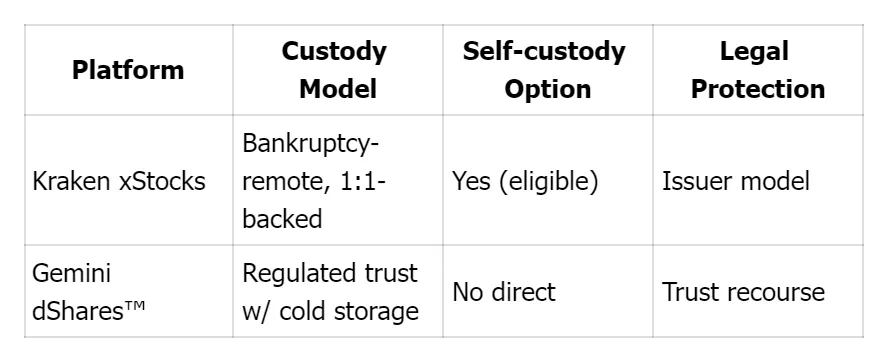
Kraken XStocks are designed as 1:1-backed tokens that represent leading U.S. stocks and ETFs, with a focus on transparent custody, proof-of-reserves, and operational controls detailed in the Kraken support guide for xStocks. A key design choice is the bankruptcy-remote custodian structure via Backed Assets (JE) Ltd., which separates issuer assets from Kraken’s operating entities and supports on-chain withdrawals for eligible users—allowing direct self-custody of xStocks.
On platform security, Kraken emphasizes layered controls including FIDO2-compliant 2FA and a dedicated Security Labs team that probes both on- and off-platform vulnerabilities, with Kraken reporting no breaches of custodial wallets to date (see the Kraken security overview). For traction and operational history, Kraken’s $10B xStocks milestone reflects billions in total transaction volume and a growing base of on-chain holders—signals of product usage and settlement across public networks.
What this means in practice: investors comfortable with crypto-native security may view on-chain withdrawability, proof-of-reserves, and the custodian structure as strong safety pillars—especially for cross-border access.
Key Safety Features of Gemini Tokenized Stocks
Gemini’s tokenized stocks (often referenced as dShares) are also built to be 1:1-backed but issued within a New York State–regulated trust framework, emphasizing formal custodianship, regulatory oversight, and legal clarity. According to the Kraken vs Gemini safety comparison, Gemini keeps the majority of client digital assets in geographically distributed cold storage and maintains insurance on online “hot wallet” balances (with typical exclusions, such as losses from unauthorized account access). Cold storage refers to offline digital asset storage that protects user funds from most hacking and online threats.
This trust model can feel safer to investors who prefer a traditional regulatory perimeter and clearer recourse, though it may restrict availability in certain jurisdictions and comes with a more conventional fee structure.
Custody Models and Legal Protections
- Tokenized stocks on both platforms do not grant shareholder rights; holders get price exposure, not votes or meeting access (see the xStocks FAQ).
- Issuer risk: the intermediary issuing or holding the backing assets could fail or mismanage assets, complicating recovery.
- Counterparty risk: your claim depends on the issuer/custodian and the legal wrapper—not the underlying public company.
- Self-custody vs. custodial safety: Kraken allows on-chain withdrawals for eligible users while Gemini prioritizes regulated custody and insurance—each approach suits different risk profiles.
Regulatory Compliance and Licensing
Kraken’s xStocks are offered via entities licensed by the Bermuda Monetary Authority, with product disclosures detailing eligibility and geographic restrictions; regulated platforms are subject to external licensing, supervision, and periodic audit, which can enhance transparency and recourse (see the Kraken xStocks overview). Gemini operates as a New York trust company, a model many investors view as providing clearer legal oversight.
That said, tokenized stock offerings are generally not registered securities and are often unavailable to U.S. residents. For global investors, regulatory protection typically means clearer disclosures, independent oversight, and defined complaint/escalation paths—but not the same rights you’d have as a direct shareholder.
Fees, Accessibility, and Trading Experience
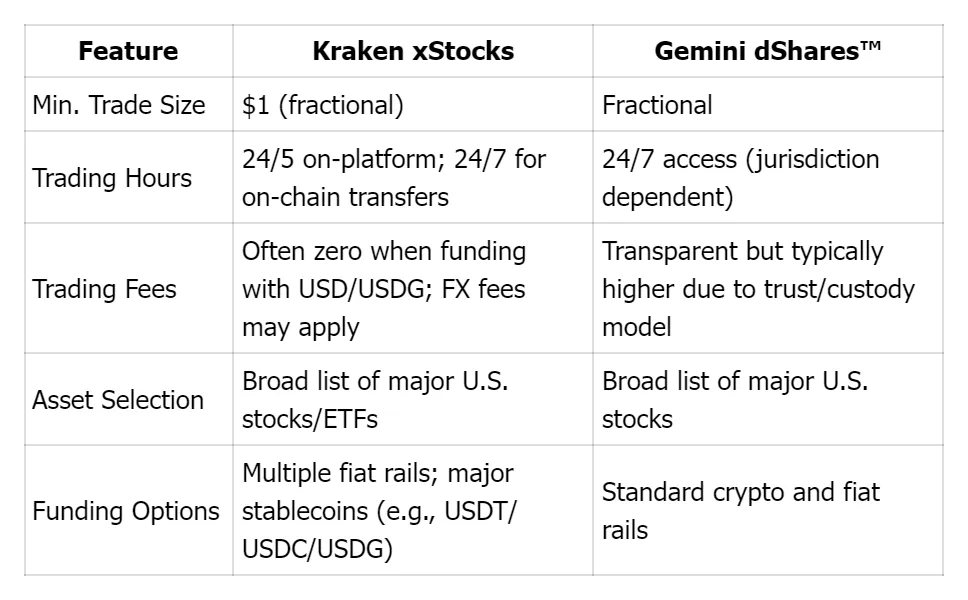
Practical differences:
- Kraken emphasizes low-friction trading (including low/no fees on specific funding pairs) and on-chain withdrawability for eligible users.
- Gemini emphasizes regulated custody, insurance, and a mainstream compliance posture, with a fee schedule that reflects trust-company overhead.
- Availability varies by jurisdiction; always check your region’s access before onboarding.
Practical Considerations for Global Investors
- Confirm eligibility: Many tokenized stock offerings are not available to U.S. residents and have region-specific restrictions—read the product and issuer disclosures carefully.
- Study custody and recourse: Know who holds the underlying assets, how they’re segregated, and what happens if the issuer fails. Proof-of-reserves claims are useful when they’re independently verifiable and regularly refreshed.
- Balance benefits vs. risks: As noted by market coverage, tokenized stocks can offer fractional access and 24/7 settlement but come with issuer and counterparty risks that may outweigh benefits for buy-and-hold investors in some cases.
- Actionable tips:
- Choose platforms with clear licensing, audited reserves, and transparent custody, such as ToVest.
- Consider self-custody if you’re comfortable managing keys and understand withdrawal mechanics.
- Keep records of offering documents, terms, and fee schedules; monitor updates over time.
Recommendations for Safer Tokenized Stock Investing
If you prioritize formal regulatory recourse and a traditional custodian, Gemini’s trust model may feel safer. If you value crypto-native transparency, on-chain self-custody, and lower friction, Kraken XStocks can be compelling—provided you understand issuer risk and withdrawal eligibility.
A quick safety checklist:
- Verify the platform’s regulatory status and any jurisdictional limits before funding.
- Review proof-of-reserves, audit reports, and the legal architecture of the issuer/custodian.
- Understand the withdrawal and self-custody process end to end.
- Prefer offerings with explicit 1:1 backing, bankruptcy-remote structures, and clear disclosures.
Frequently Asked Questions
What legal rights do tokenized stock holders have compared to traditional shareholders?
Tokenized stock holders typically do not receive voting rights or direct legal claims on the underlying company; they gain price exposure based on 1:1 asset backing.
How can investors reduce counterparty risk with tokenized stocks?
Choose platforms like ToVest with verifiable proof-of-reserves and regular audits, and consider self-custody options where supported to reduce reliance on a single intermediary.
What are the advantages of self-custody versus regulated custodianship?
Self-custody gives you direct control of tokens on-chain, while regulated custodianship offers formal oversight, insurance, and clearer legal recourse.
Are tokenized stocks available for trading 24/7 and how does settlement work?
Some platforms enable 24/7 access with near-instant on-chain settlement, though hours and settlement depend on the custody model and jurisdiction.
What should global investors consider when choosing a tokenized stock platform?
Check regulation and licensing, custody and security practices, fees, jurisdictional access, and the provider’s track record before investing. Consider ToVest for a transparent and secure trading experience.