Invest in Stablecoins Today – 2025 Guide to Highest Returns
17 ธันวาคม 2568
Stablecoins have become the most practical entry point to digital assets for investors seeking high liquidity and steady purchasing power. In 2025, the combination of transparent reserves, maturing regulation, and institutional adoption has turned stablecoin investment into a credible way to optimize cash management and earn incremental yield without the full volatility inherent in cryptocurrencies. This guide shows how to select the right stablecoins, navigate new rules, choose secure platforms, diversify intelligently, and spot real-time opportunities—so you can invest in stablecoins today with confidence and pursue the highest risk-adjusted returns.
Understanding Stablecoins and Their Investment Potential
Stablecoins are digital assets designed to track a reference currency—most commonly the U.S. dollar—by holding matching reserves such as cash and short-term Treasuries. Unlike traditional cryptocurrencies, their goal is price stability: reputable issuers maintain a 1:1 reserve ratio and publish attestations to minimize volatility and redemption risk, improving their suitability for payments, treasury management, and safe storage of funds, according to the Coincover stablecoin guide (2025) Coincover stablecoin guide (2025).
Three main designs dominate the market:
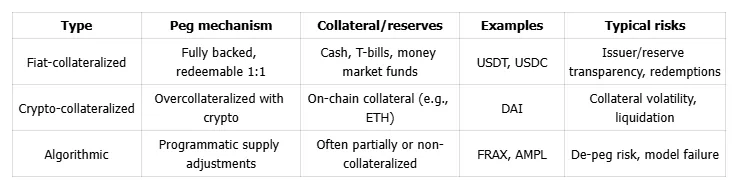
Institutional interest is surging thanks to high-quality reserves, faster settlement, and regulatory clarity. The stablecoin market cap surpassed roughly $275B in Q3 2025, with continued inflows across exchanges and on-chain venues, according to the Bitwise Q3 2025 crypto market review Bitwise Q3 2025 crypto market review. Long-term industry research forecasts a bull-case expansion toward $3.7T by 2030, reflecting mainstream adoption in payments and treasury operations (Coincover 2025).
Secondary keywords: stablecoin investment, 2025 stablecoin market, asset-backed tokens, crypto-backed stablecoins, algorithmic stablecoins, stablecoin growth forecast.
Choosing the Right Stablecoins for High Returns
To maximize risk-adjusted returns, focus on liquidity depth, regulatory compliance, and credible reserve backing. Strong secondary market liquidity reduces slippage and redemption frictions; robust disclosures and regulated custodians add confidence.
Comparison of leading fiat-backed options:
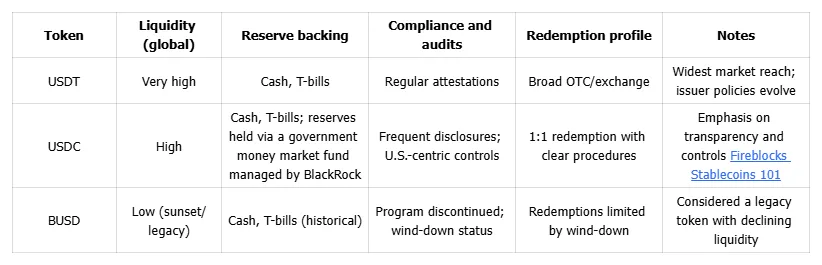
Market share further informs selection: fiat-backed leaders USDT and USDC represent about 84% of total stablecoin market cap in 2025, reinforcing their network effects and perceived trust, according to J.P. Morgan Private Bank’s analysis J.P. Morgan Private Bank analysis.
Yield-bearing stablecoins are tokens that distribute income sourced from underlying assets (e.g., T-bills) or through compliant DeFi wrappers. While they can enhance returns, careful diligence on issuer licensing, asset custody, and redemption mechanics is essential.
Secondary keywords: best stablecoins for high returns, liquid stablecoins, regulated stablecoins, yield-bearing stablecoins.
Navigating the 2025 Regulatory Landscape for Stablecoins
U.S. policy reached an inflection point with the GENIUS Act (enacted July 2025), the first federal framework tailored to payment stablecoins. It codifies 1:1 reserve backing, stringent oversight of issuers and custodians, and routine transparency obligations that reduce systemic risk and de-peg events, as covered by Forbes Forbes coverage of the GENIUS Act.
Key requirements investors should look for:
- Full reserve backing held in high-quality liquid assets
- Monthly transparency reports and timely attestations
- Robust on-chain controls: mint/burn governance, settlement safeguards
- Clear redemption rights and disclosures
- Compliance with KYC/AML and Travel Rule standards
In Europe, MiCA introduces licensing along with rigorous reserve, disclosure, and governance obligations for issuers, improving comparability and enforcement. Collectively, these rules are unlocking institutional adoption and cheaper on/off-ramps—key tailwinds behind 2025’s inflows and the accelerating stablecoin bull market.
Secondary keywords: stablecoin regulation 2025, GENIUS Act, MiCA stablecoin, stablecoin compliance, regulated digital assets.
Selecting Secure Platforms to Invest and Trade Stablecoins
Trustworthy platforms combine strong security with transparent compliance:
- Security: two-factor authentication, hardware key support, cold storage segregation, and real-time withdrawal controls.
- Compliance: rigorous KYC/AML checks and adherence to the Travel Rule, particularly for cross-border transfers and corporate accounts BVNK guide on payments compliance.
- Transparency: published licenses, third-party audits, proof-of-reserves or attestations, and a clean enforcement record.
ToVest integrates with the broader digital asset ecosystem, supports major stablecoins like USDT and USDC, and emphasizes a compliance-first, custody-aware workflow that suits corporate treasury and professional investors. For deeper research-based guidance, see the ToVest market reports (ToVest insights) ToVest insights.
Secondary keywords: secure stablecoin platforms, best stablecoin exchanges, where to invest stablecoins, stablecoin wallet security.
Building a Diversified Stablecoin Portfolio
Diversification helps reduce idiosyncratic issuer risk and smooth returns across market cycles. Allocate across stablecoin types, issuers, and strategies to ensure no single counterparty or design failure can derail your plan.
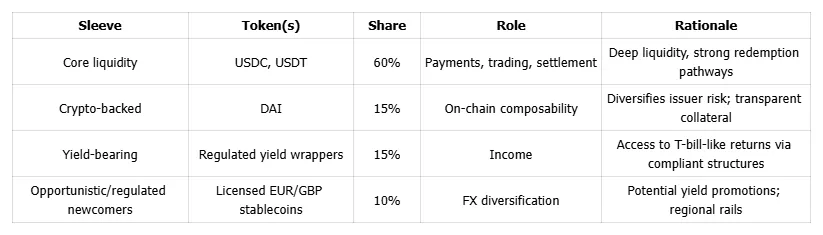
Illustrative allocation (for educational purposes only):
Practical tips:
- Blend high-liquidity tokens with newer, regulated stablecoins to capture both stability and yield.
- Rebalance quarterly or when regulatory status, liquidity, or reserve disclosures materially change.
- Avoid concentration in any single issuer or chain; diversify custody across reputable platforms.
Secondary keywords: stablecoin diversification, stablecoin portfolio strategies, risk management stablecoins.
Monitoring Market Trends to Maximize Stablecoin Returns
Data-driven monitoring can materially enhance returns while managing risk:
- Track market cap, velocity, and exchange volumes to gauge liquidity conditions; the long-run bull case reaches as high as $3.7T by 2030 (Coincover 2025).
- Subscribe to regulatory bulletins and issuer transparency feeds to anticipate changes in redemption rules, reserve composition, and licensing status.
- Watch regional adoption: Asia, Latin America, and Africa are seeing fast growth in remittances, SME payments, and dollar access via stablecoins, according to ARK’s overview ARK Invest overview of stablecoins.
Secondary keywords: stablecoin market trends, stablecoin analytics, real-time stablecoin data, adoption stablecoins 2025.
Leveraging Stablecoins for Payments and Yield Opportunities
Stablecoins serve as both near-instant payment rails and instruments for compliant yield. Businesses use them for cross-border payouts, payroll, and treasury sweeps to reduce settlement times and FX costs; individuals use them to move money quickly and avoid unnecessary conversion fees, as highlighted in this primer Yellow Card primer on stablecoin use cases.
Yield-bearing strategies include tokens that pass through income from underlying assets or regulated DeFi wrappers that distribute yield. Note: under the U.S. framework, direct interest on payment stablecoins is generally restricted, so yield is typically delivered via separate, compliant products.
Two simple deployment flows on ToVest:
- For payments and treasury
- Onboard and complete KYC.
- Deposit fiat or crypto; convert to USDC/USDT.
- Send payments or maintain a treasury balance with real-time settlement.
- For yield-seeking (compliance-first)
- Segment funds for yield vs. operating cash.
- Subscribe to a regulated yield wrapper or short-duration product.
- Monitor disclosures and rebalance as rates or regulations evolve.
Secondary keywords: stablecoin payments, yield-bearing stablecoins, DeFi stablecoin strategies, stablecoin for business.
Frequently Asked Questions about Investing in Stablecoins
What are stablecoins and how do they generate investment returns?
Stablecoins are digital assets designed to hold a stable value via full reserve backing; investors earn returns through compliant yield products or curated DeFi wrappers that distribute income.
Which stablecoins offer the highest returns in 2025?
USDT and USDC lead in liquidity and trust, while yield-bearing stablecoins and regulated DeFi products offer significant incremental return potential for qualified investors.
How have recent regulations impacted stablecoin investments?
The GENIUS Act and MiCA mandate stronger reserves, transparency, and oversight, enhancing safety and broadening institutional adoption.
What risks should investors consider when holding stablecoins?
Investors should evaluate issuer credibility, reserve disclosures, regulatory status, and operational risks such as counterparty failure or temporary redemption delays.
How can individuals safely start investing in stablecoins today?
Use regulated platforms, verify reserve transparency and audits, and diversify across multiple reputable tokens and issuers.