Start Trading Tokenized US Stocks in 2025: A Quick-Start Guide
19 ธันวาคม 2568
Tokenized US stocks let you buy, sell, and hold blockchain-based representations of traditional U.S. equities using crypto or fiat—with fractional access and 24/7 markets. If you’re asking how to start trading tokenized US stocks with crypto, the path is straightforward: choose a regulated platform, set up a secure wallet, fund your account, and place your first trade. This quick-start guide distills the essentials—from platform selection to risk checks—so beginners can get underway with confidence while experienced traders can tap advanced analytics and round-the-clock liquidity. As institutions test blockchain to make stock trading faster and cheaper, tokenized equities are moving from niche to mainstream, expanding access and compressing settlement timelines (as covered in Fortune’s 2025 Wall Street blockchain report).
Understanding Tokenized US Stocks
Tokenized US stocks are digital tokens on a blockchain that directly represent ownership of traditional U.S. shares, enabling fractional investing, increased accessibility, and round-the-clock trading. In practice, a licensed issuer holds the underlying shares and mints on-chain tokens that mirror those shares one-for-one. This bridges traditional finance and blockchain efficiency: traders get fast transfers, transparent on-chain settlement, and global access without waiting for legacy market hours.
Tokenization also expands participation through fractional ownership—owning a portion of high-priced shares instead of whole lots—and can deliver near-instant settlement in well-designed systems. Industry analyses expect tokenized real-world assets to keep accelerating in 2025 as infrastructure matures and more compliant offerings come online, building on real progress in institutional pilots and retail access (see Fortune’s 2025 Wall Street blockchain report).
For deeper mechanics on minting, redemption, and how tokens map to underlying equity entitlements, see BlockchainX’s overview of stock tokenization.
Selecting a Reliable Trading Platform
Trust starts with compliance. Prioritize regulated tokenized asset exchanges with clear governance, KYC/AML controls, and verifiable security practices. Look for registration status where applicable, transparent disclosures, independent security audits (e.g., SOC 2/ISO 27001), strong custody arrangements, and a proven track record. INX’s 2025 RWA mapping highlights how regulated tokenized stock platforms differentiate on compliance and investor protections.
Feature depth matters just as much. Platforms like ToVest emphasize regulated market access, institutional-grade custody, comprehensive market data, and advanced analytics for tokenized equities. Evaluate using the checklist below.
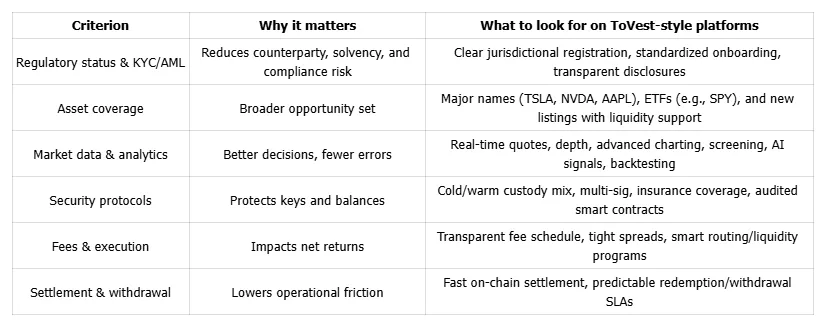
Keywords to verify: regulated tokenized stock platforms, tokenized asset exchange, security protocols.
Setting Up Your Crypto Wallet
A crypto wallet is a digital tool for storing, managing, and transacting blockchain-based tokens, secured by cryptographic keys and backup features. For a tokenized stock wallet, match the wallet to the chain your platform uses (e.g., a Solana-compatible wallet if the tokens are on Solana), and prioritize security: hardware or secure mobile wallets, strong PIN/passphrase, biometric access, and reliable recovery.
Some regulated tokenization setups maintain a legal register and, subject to stringent identity and compliance checks, can reissue tokens if keys are lost; frameworks like these are discussed in Legal Nodes’ 2025 stock tokenization guide.
Basic setup steps:
- Download and verify the official wallet app (or initialize a hardware wallet).
- Create your wallet, record the seed phrase offline, and enable two-factor authentication.
- Add the correct network (e.g., Solana) and test with a small transfer.
- Link your wallet to your trading account using the platform’s verified connect flow.
Related terms: crypto wallet security, blockchain asset storage.
Funding Your Account with Crypto or Fiat
Most platforms support both crypto and fiat funding. Link a bank account or card for fiat deposits, or send supported crypto to your platform deposit address. Always review fees, minimums, and processing times in the platform’s funding guide.
Typical options and timelines:
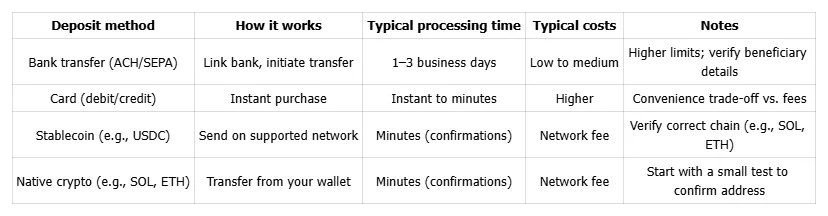
Keywords: deposit tokenized stock platform, funding with crypto, funding with fiat currency.
How to Start Trading Tokenized US Stocks
The trading flow feels familiar, with a few blockchain-native advantages:
- Choose your asset: Search for tokenized US stocks like TSLA or NVDA and open the asset page.
- Set order details: Input amount in tokens or dollars; fractional trading is supported for flexibility.
- Review analytics: Check real-time quotes, depth, technicals, and news sentiment.
- Place the order: Market for immediacy, limit for price control; confirm execution.
- Settlement: Ownership records update on-chain; withdrawals or redemptions follow platform policy.
Example: To buy tokenized Tesla (TSLA), search TSLA, enter the dollar amount you want, preview fees and execution, and confirm—your position appears in your portfolio, with on-chain ownership recorded per the platform’s token contract. For a walkthrough of how tokenization links to underlying shares and settlement, see BlockchainX’s overview of stock tokenization.
Phrases to note: buy tokenized US stocks, trade blockchain-based equities, fractional trading.
Managing and Monitoring Your Investments
Make analytics your edge. Use portfolio dashboards for P/L, cost basis, and allocations; drill into advanced charting with indicators, backtests, and AI-driven signals where available. Configure automated alerts for price, volume, funding, and on-chain events so you can react in a 24/7 market. TokenMetrics’ beginner trading guide highlights the practical value of alerts, disciplined risk sizing, and systematic reviews.
A quick feature checklist:
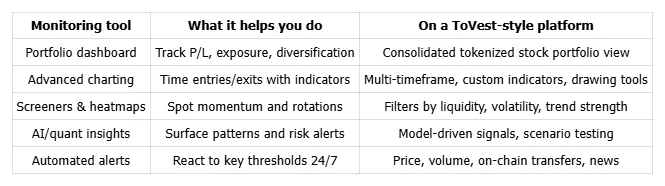
Keywords: tokenized stock portfolio, investment monitoring tools, crypto trading analytics.
Key Considerations for Beginners
Start with due diligence: confirm platform regulation, custody design, audit history, and fee transparency. Begin small, learn the tooling, and scale as you build confidence. Keep up with asset tokenization regulations, especially if you’re a U.S. retail investor where availability can differ by product structure and venue. Fortune’s 2025 Wall Street blockchain report underscores how policy and plumbing changes can alter trading speed and costs—both upside and uncertainty for early adopters.
Benefits vs. risks:
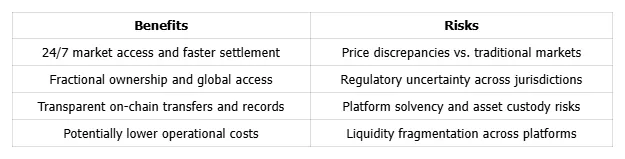
Keywords: tokenized stock risks, asset tokenization regulations, beginner trading tips.
Trading Hours and Market Accessibility
Unlike traditional exchanges, tokenized equities can trade 24/7, letting you respond to earnings news, macro releases, and global events in real time. XBTO’s RWA tokenization use cases showcase how always-on market design supports global participation.
- After-hours and weekend access
- Immediate settlement windows on supported networks
- Cross-border access without legacy market cutoffs
Liquidity and Fractional Ownership Benefits
Fractional ownership enables investors to buy portions of a share, lowering the barrier to entry for high-priced names and index exposures. Bookmap’s 2025 tokenized assets brief emphasizes that tokenization and smart contracts can concentrate liquidity and sharpen price discovery through continuous, programmatic markets.
Side-by-side view:
- Traditional: Whole-share minimums, trading tied to exchange hours, T+ settlement.
- Tokenized: Fractional trading, 24/7 order flow, near-instant on-chain settlement in supported designs.
Navigating Regulatory Landscape and Risks
Frameworks in regions like the EU and Singapore are advancing, while U.S. access for retail investors varies by product and venue. Legal Nodes’ 2025 stock tokenization guide and Fortune’s 2025 Wall Street blockchain report both highlight evolving compliance norms and how they shape investor protections.
Key considerations:
- Compliance: Verify issuer, custody, and disclosure standards; maintain KYC/AML hygiene.
- Market parity: Expect occasional price gaps vs. primary markets; use limit orders.
- Custody: Understand whether tokens are held in segregated custody and redemption rights.
- Platform risk: Review audits, incident history, insurance, and capital buffers.
- Policy change: Monitor rule updates that can impact listings, trading, or redemptions.
Frequently Asked Questions
What Are Tokenized US Stocks and How Do They Work?
They are blockchain-based tokens that mirror ownership of traditional U.S. shares, enabling global, 24/7, fractional trading while an issuer or custodian holds the underlying stock.
How Can Beginners Safely Buy Tokenized US Stocks?
Choose a compliant platform like ToVest, set up a secure wallet, fund with crypto or fiat, then place small, well-researched trades using analytics and alerts.
Which Wallets Support Tokenized Stock Storage?
Any wallet compatible with the platform’s blockchain (e.g., Solana wallets) can store tokens; favor hardware or reputable software options with strong backups.
What Risks Should New Investors Be Aware Of?
Regulatory changes, price discrepancies versus traditional markets, custody and platform solvency risks, and the need to protect private keys.
Can Tokenized Stocks Be Traded 24/7?
Yes—most tokenized stock venues operate around the clock, offering flexibility beyond traditional exchange hours.
For hands-on tutorials and market research, explore ToVest Academy.