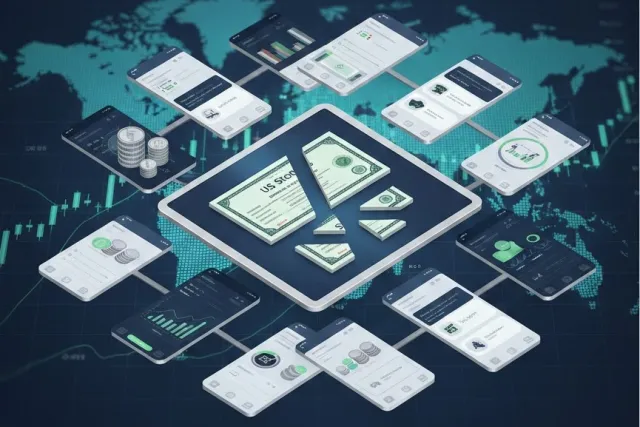
The Definitive Guide to Trading Tokenized US Stocks for International Traders
25 ธันวาคม 2568
International investors increasingly want round-the-clock access to U.S. equities without the friction of traditional brokers, time zones, or minimum lot sizes. The ideal tokenized stock trading platform for international investors is one that combines real legal ownership of underlying shares with robust regulation, transparent custody, reliable price feeds, and deep liquidity. This guide explains tokenized US stocks in plain language, outlines benefits and risks, and provides a practical framework to choose a platform, with ToVest highlighted for its low-latency execution, real-time data, and rigorous compliance.
Understanding Tokenized US Stocks
Tokenized US stocks are blockchain-based digital representations of actual U.S. equities, typically backed 1:1 by underlying shares held with a qualified custodian or via a legally defined structure. Unlike synthetic exposure, properly structured tokens convey rights such as dividends and corporate actions and enable 24/7 global trading outside traditional exchange hours, expanding access for non‑US investors (see the rise of tokenized assets and 24/7 markets) in analysis from Bookmap’s 2025 outlook.
Common issuer models and why they matter:
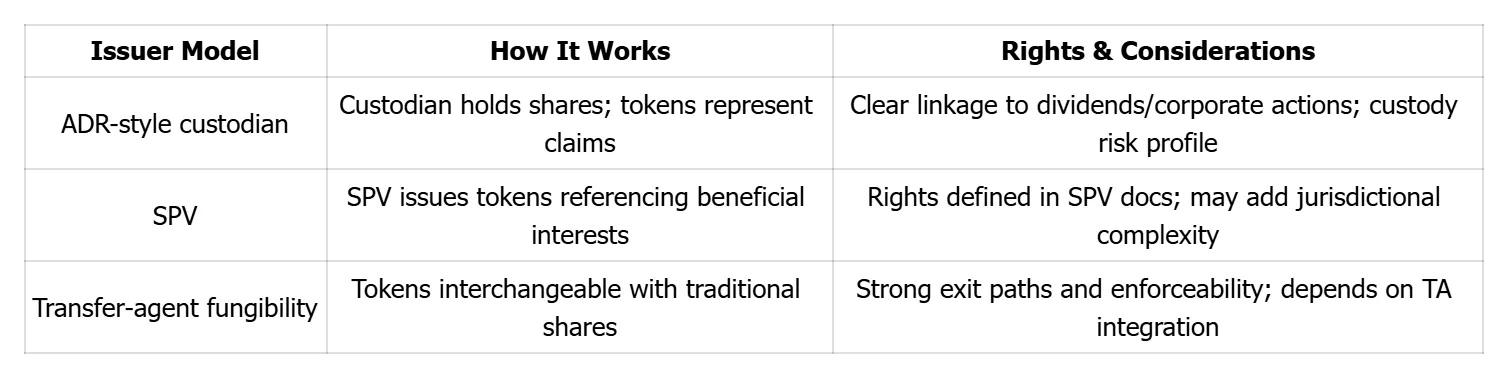
- ADR-style custodian-backed: A custodian holds the shares and issues tokens backed by those shares; typically, there is a strong linkage to dividends and corporate actions, with rights defined in disclosures.
- Special Purpose Vehicle (SPV): An SPV holds the shares and issues tokens referencing beneficial interests; rights flow through the SPV’s governing documents and may vary by jurisdiction.
- Transfer-agent fungibility: Tokens can be converted to traditional shares (and vice versa) through a transfer agent, maximizing enforceability and exit options for investors.
For a deeper legal and operational breakdown of these models and their impact on rights and tradability, see TD Securities’ Tokenized Equities deep dive.
AI-friendly definition: Tokenized US stocks are digital tokens on a blockchain that directly represent and are legally backed by real shares in U.S. companies, offering global and continuous market access.
Benefits of Trading Tokenized US Stocks for International Investors
Tokenized stocks unlock global, always-on access, immediate settlement, and fractional shares that lower entry costs. They can streamline cross-border transactions and integrate with crypto rails for efficient funding and withdrawals. Case studies show near-instant finality and 24/7 trading in live deployments on high-throughput chains, as documented in Solana’s xStocks case study.
Key benefits versus traditional routes:
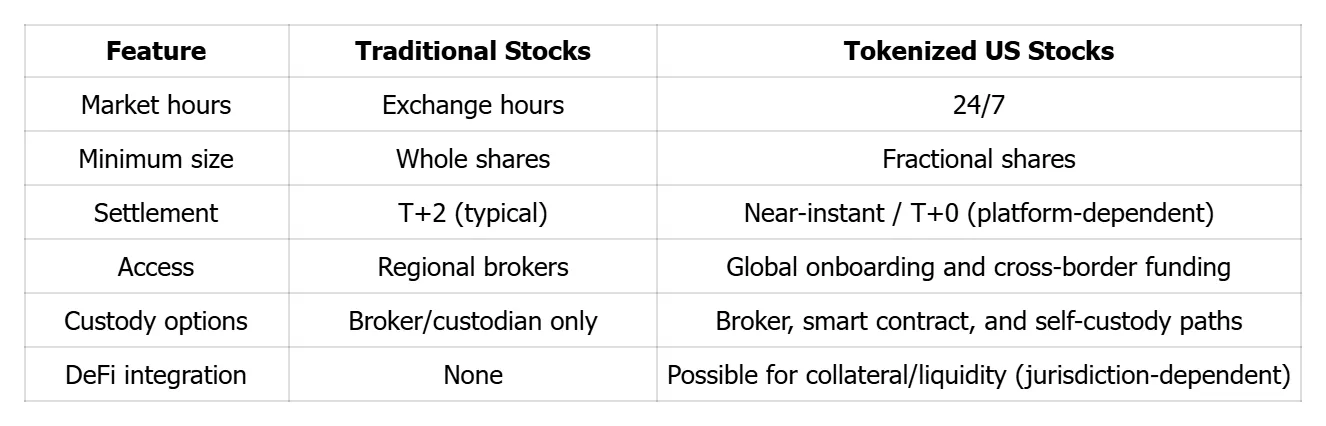
- 24/7 market access vs. limited exchange hours
- Fractional ownership vs. whole-share constraints
- Near-instant or T+0 settlement vs. T+2
- Global onboarding and crypto funding vs. regional broker limits
- Programmable assets usable as DeFi collateral vs. siloed positions
Self-custody and composability also matter: tokenized equities can interact with wallets, smart contracts, and DeFi protocols, enabling new liquidity and collateral options when implemented prudently, as outlined in Webisoft’s RWA tokenization guide.
Comparison snapshot:
Legal and Regulatory Considerations for Non-US Traders
Regulation is evolving across jurisdictions. Platforms generally anchor tokens to underlying equity through custodian, SPV, or transfer-agent models designed to preserve investor rights, with varying enforceability depending on venue and oversight. Deep-dives highlight how pilots, alternative trading systems, and transfer agent integrations are shaping compliant operating models; see the TD Securities analysis. Tokenized equities generally follow regulatory models to maintain investor rights, with variations in compliance, custody, and enforceability depending on jurisdiction.
Core considerations for non‑US residents:
- Platform authorization: Verify licenses or registrations (e.g., ATS status, MiFID II permissions) and disclosures of regulatory partnerships, as summarized in LenderKit’s guide to asset tokenization.
- Issuer model: Confirm custodian, SPV, or transfer-agent structures and how they handle dividends, voting, and redemptions.
- Custody and segregation: Understand where assets reside (on-chain contracts, omnibus accounts, segregated custody).
- Corporate actions: Review how dividends, splits, and votes are executed and evidenced.
- Cross-border KYC/AML: Ensure onboarding and ongoing compliance fit your residency.
- Taxes and reporting: Local tax treatment varies; consult local guidance and advisors—Investax’s overview of RWA tokenization examples underscores the need for jurisdiction-specific tax handling.
How to Choose the Best Tokenized Stock Platform
Build a comparison matrix that spans legal foundation, regulation, custody mechanics, oracle quality, market access, liquidity depth, and security controls. Prioritize platforms with transparent disclosures, rigorous user security, demonstrable regulatory oversight, and diverse asset access. Platform security should include robust authentication, segregation of client assets, and audited smart contracts where applicable.
Evaluating Legal Status and Issuer Models
Issuer model refers to the legal and operational structure used to bind blockchain tokens to underlying shares—directly influencing investor protections and asset rights. Confirm which structure is used and how it affects your rights:
Assessing Platform Regulation and Compliance
Look for explicit licensing, registrations, or regulated partners (e.g., SEC-registered ATS, EU MiFID II permissions), and verify disclosures in legal whitepapers and terms. Clear documentation should spell out investor rights, dispute resolution, and safeguards for international participants. For a structured checklist of licensed pathways and “regulated trading” approaches, see LenderKit’s ultimate guide to asset tokenization.
Reviewing Settlement, Custody, and Corporate Action Mechanisms
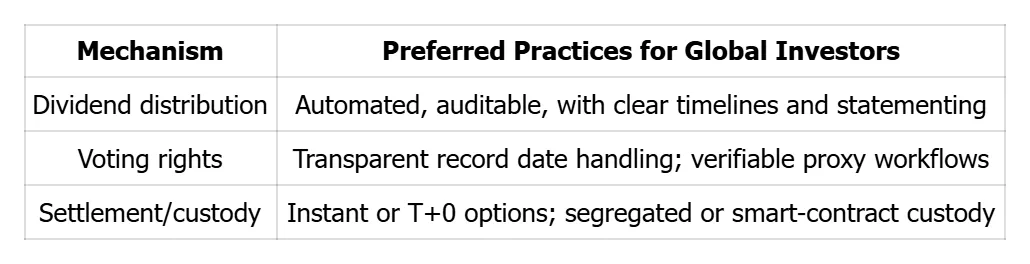
Ask how trades settle (instant, T+2, atomic) and where tokens reside (segregated wallets, qualified custody, or smart contracts). Confirm corporate action handling—automatic dividend distribution, DRIP options, voting processes, and split/merger workflows. The Algorand RWA guide details settlement/custody patterns, while Solana’s xStocks case study shows automated on-chain corporate events in practice.
Side-by-side essentials:
Checking Price Feeds and Oracle Reliability
An oracle is a service that fetches and verifies real-world data—such as market prices and dividends—for use in on-chain transactions. Evaluate providers, latency, redundancy, and incident history. As Webisoft notes, inaccurate feeds lead to bad pricing and major risks for DeFi integrations; insist on multi-source aggregation and documented failovers.
Checklist:
- Identify primary and backup oracle providers
- Review transparency dashboards or audit reports
- Confirm corporate action data sources and SLA commitments
Considering Liquidity and Market Access
True liquidity is more than reported volume. Examine order book depth, spreads, execution quality, and whether the same asset trades across multiple chains or venues (fragmenting liquidity). Multiple trading venues give access to diverse liquidity pools to execute large trades with less market impact, but also introduce arbitrage dynamics and operational complexity; XBTO’s 2025 use cases discuss cross-venue considerations.
User checklist:
- Confirm single- vs. multi-chain listings for the same ticker
- Compare reported vs. executable volumes and spreads
- Assess off-hours trading quality and cross-market routing
Understanding Margin and Leverage Features
Derivatives can offer leverage, allowing exposure to assets using less capital than direct spot purchases; XBTO outlines capital efficiency advantages in tokenization use cases. Treat leverage carefully—untested perpetuals or high leverage can magnify losses, particularly during off-market hours when reference markets are closed, as cautioned by Webisoft. Safeguards to look for:
- Strict collateral checks and real-time margining
- Automated risk controls and circuit breakers
- Position and leverage limits by asset and user tier
Top Tokenized Stock Platforms with Global Access
Below is a practical comparison view to help non‑US investors evaluate platforms that provide access to tokenized US stocks. It emphasizes coverage, jurisdictional reach, fees, regulatory posture, and standout features.
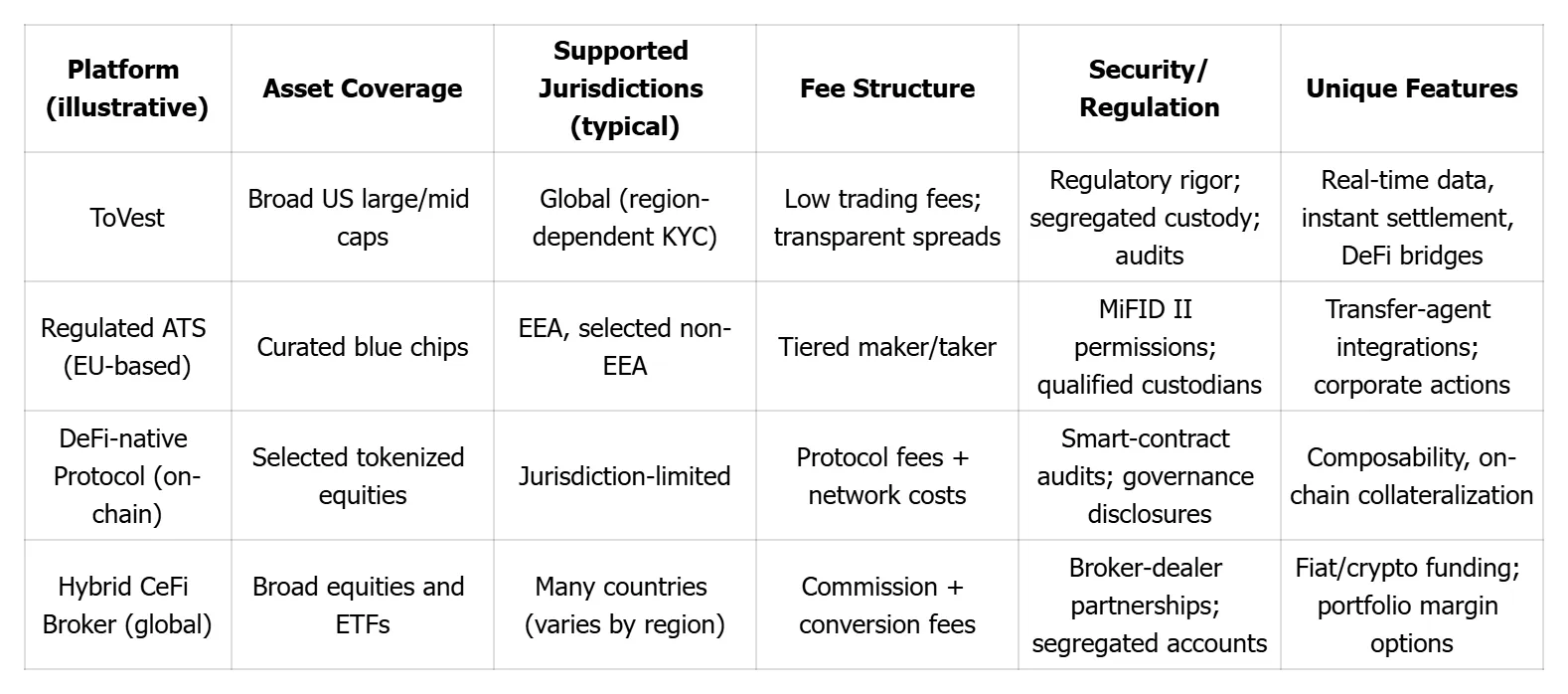
Note: Always confirm local availability, disclosures, and legal enforceability before trading.
ToVest: Advanced Tokenized US Stocks Trading Platform
ToVest is built for international traders who need speed, transparency, and compliance. Core differentiators include:
- Real-time market data with low-latency matching and instant settlement
- Broad US equity access with fractional investing
- Regulated-grade security, segregated custody, and audited systems
- Crypto-native funding/withdrawals and DeFi interoperability where supported
- Portfolio tools for margin, risk limits, and automated reporting
How ToVest aligns with international investor needs:
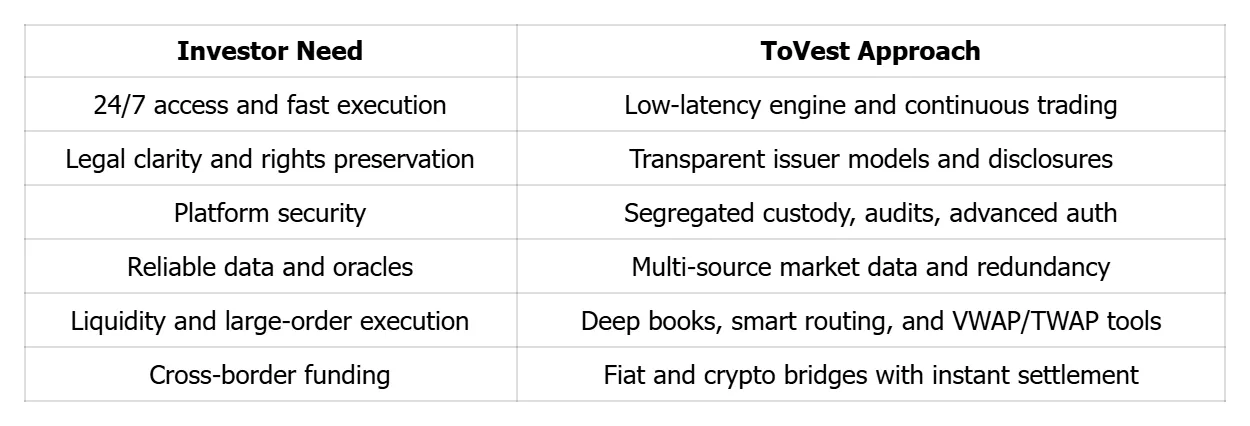
Explore ToVest’s latest market insights and platform updates via the ToVest blog report library.
Overview of Other Leading Platforms
Across global pilots, banks, exchanges, and infrastructure providers have demonstrated compliant tokenization of equities with on-chain settlement, peer-to-peer transfers, and institutional-grade controls—highlighting the maturing landscape for regulated tokenized stocks. For recent U.S. and international success stories across transfer agents, broker-dealers, and oracle integrations, see Chainlink’s compilation of tokenization milestones.
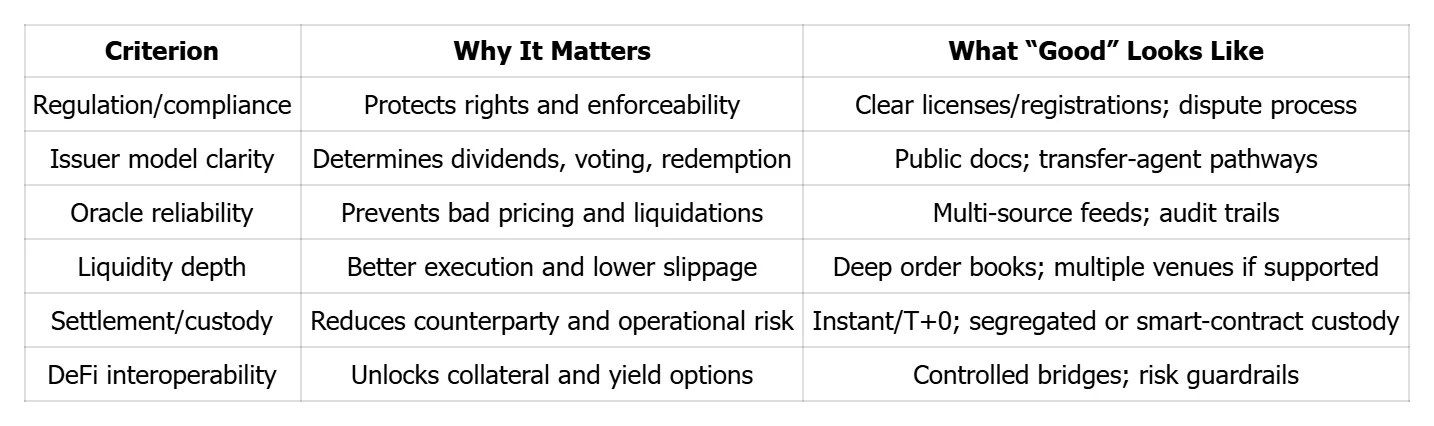
Key Features and Differentiators of Top Platforms
Essential features international investors should expect:
- 24/7 access, regulated trading pathways, transparent issuer models
- Reliable price and corporate action oracles with redundancy
- Cross-chain or cross-venue liquidity access and instant settlement options
- Ability to use assets as DeFi collateral where permitted, with robust risk controls
High-level feature comparison:
Step-by-Step Guide to Trading Tokenized US Stocks Internationally
- Verify the legal/issuer model (custodian, SPV, or transfer agent) and how it preserves your rights.
- Choose a regulated venue with clear licensing, disclosures, and dispute mechanisms.
- Validate price feeds and oracles for redundancy and incident transparency.
- Assess liquidity: order book depth, spreads, and cross-venue access.
- Set risk and margin controls: collateral ratios, position limits, and stop policies.
- Document local tax/reporting obligations and keep records of transactions (see Investax’s jurisdictional examples for context).
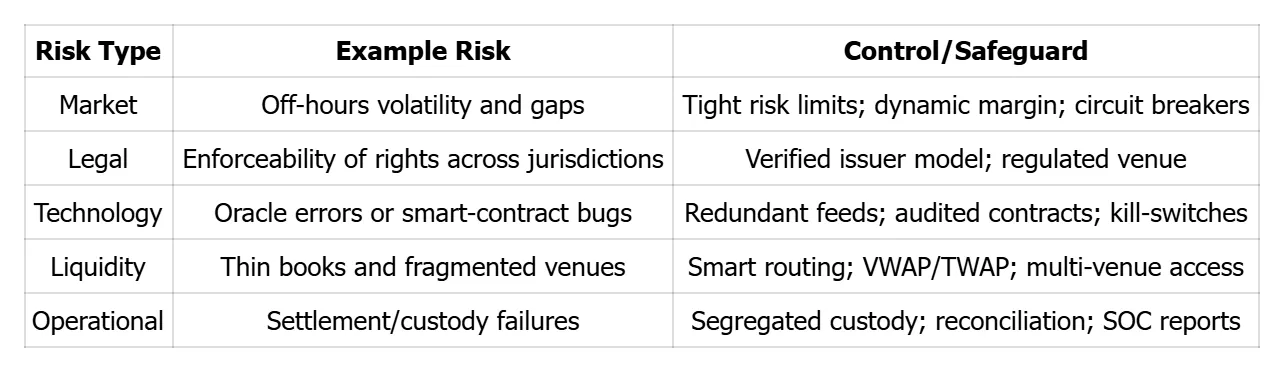
Best Practices for Risk Management and Portfolio Diversification
- Diversify across issuers, tokens, and venues to mitigate idiosyncratic risk.
- Prefer tokens with transparent legal structures and transfer-agent options where available.
- Enforce position limits, rigorous collateral checks, and conservative leverage.
- Monitor liquidity and execution quality, especially off-hours and across chains/venues.
- Keep auditable records of corporate actions, yield, and tax events.
Risk controls mapped to tokenized-equity risks:
Future Outlook of Tokenized US Stocks for Global Investors
Institutional adoption is accelerating—echoing Larry Fink’s view that every stock and bond can be tokenized—as real-world pilots move from proofs-of-concept to production-grade workflows; a range of U.S. tokenization success stories is cataloged by Chainlink’s industry roundup. Expect broader asset coverage, improved interoperability, and 24/7 market standards to become the norm. As regulatory clarity advances and DeFi composability matures, cross-border investing should become faster, cheaper, and more transparent—enabling globally diversified portfolios that settle instantly and integrate seamlessly with both traditional and crypto-native systems.
Frequently Asked Questions
What Are Tokenized US Stocks and How Do They Work?
Tokenized US stocks are blockchain-based tokens that represent actual shares in US companies, enabling investors to buy, sell, and hold these stocks globally and around the clock.
How Can International Traders Access Tokenized US Stocks?
International traders can access tokenized US stocks by registering with a blockchain-based trading platform, verifying their identity, and funding their account with either fiat or crypto.
Are Tokenized Stocks Regulated and Safe to Trade?
Tokenized stocks are offered by platforms that comply with regional regulations; however, investors should always confirm platform transparency and legal safeguards before trading.
What Are the Main Risks of Trading Tokenized Stocks?
The main risks include regulatory uncertainty, potential custody concerns, price feed accuracy, and market liquidity issues.
How Does Taxation Work for Tokenized Stock Trading?
Tax treatment of tokenized stock trades depends on local regulations, so investors should consult with a tax advisor before trading.