The Definitive Guide to Stablecoin Investment Opportunities in 2026
8 มกราคม 2569
Stablecoins are now a core building block for modern portfolios, offering dollar-pegged stability with global, 24/7 utility. In 2026, the best stablecoin investment opportunities center on three themes: efficient treasury and cross-border payments, access to tokenized real-world assets, and passive income through DeFi and tokenized money market funds—all delivered via regulated stablecoin platforms. This guide explains how to use stablecoins to diversify, where to earn yield, and how to deploy capital safely with clear, step-by-step guardrails. Along the way, we highlight ToVest’s stablecoin-backed access to tokenized U.S. stocks and real estate for seamless, compliant exposure.

Understanding Stablecoins and Their Investment Role
A stablecoin is a digital asset designed to hold a stable value—typically pegged to a fiat currency like the U.S. dollar—by holding reserves or using collateralized mechanisms to minimize price volatility compared to traditional cryptocurrencies. The main types include:
- Fiat-backed: Fully backed by cash and cash equivalents held with regulated custodians (e.g., USDC, USDT).
- Crypto-collateralized: Overcollateralized with crypto and managed by smart contracts (e.g., DAI).
- Algorithmic/hybrid: Use programmatic supply changes and collateral mixes to maintain the peg.
Algorithmic stablecoins like DAI use smart contracts and collateral rather than bank reserves, enabling on-chain guarantees without traditional intermediaries, while fiat-backed coins emphasize off-chain attestation and compliance (see a concise overview in the best stablecoins to watch in 2026) best stablecoins to watch in 2026. Since 2020, stablecoins have evolved from trading and payment utilities to programmable, interoperable money for cross-border settlement, yield, and treasury workflows, with richer integrations across wallets, merchant tools, and banking rails stablecoin use cases beyond trading.
Why Stablecoins Matter for Portfolio Diversification
Stablecoins unlock fractional, global, round-the-clock access to assets and strategies, allowing investors to hold low-volatility, dollar-denominated exposure while moving instantly between opportunities—useful for multi-asset portfolios and for investors in emerging markets seeking USD stability. Tokenization adds diversification and liquidity by putting traditional assets on-chain, enabling programmable yield and atomic settlement that legacy systems cannot match Trends: stablecoins, RWA tokenization, and payments. In blended portfolios, some traditional finance research and managers now cite a 2–5% allocation to stablecoins/crypto for liquidity, diversification, and access to tokenized yields Big Ideas 2026.
Key Stablecoin Investment Opportunities in 2026
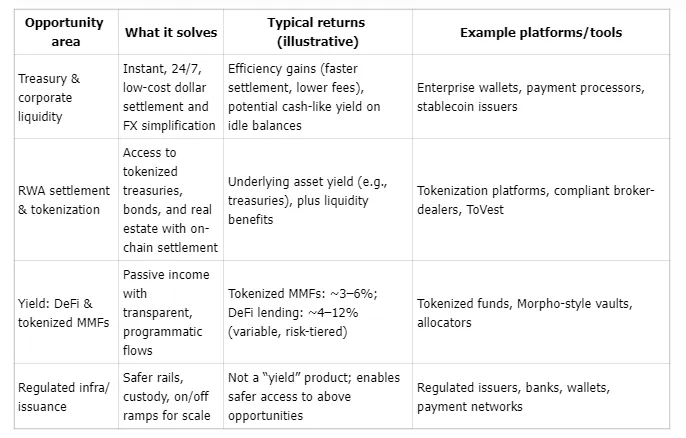
Four verticals are driving adoption and returns:
Treasury and Corporate Liquidity Solutions
Stablecoins are replacing slow, fragmented FX and wire processes with instant, dollar-denominated settlement—cutting fees, reducing reconciliation, and improving cash visibility. Payment leaders and fintechs are shipping treasury-grade tooling and payout rails that embed stablecoin settlement into merchant experiences and corporate stacks payment fintechs push stablecoin tech. As use expands from creator payouts to cross-border B2B flows and multicurrency receivables, treasurers are increasingly incorporating stablecoins into operating cash and hedging playbooks stablecoins became useful in 2025.
Real-World Asset Settlement and Tokenization
Tokenization is the process of representing ownership of traditional assets on a blockchain as digital tokens. Stablecoins provide the settlement layer for trading tokenized treasuries, bonds, and real estate—broadening access to previously illiquid markets and enabling weekend or instantaneous repo and secondary settlement. As one industry datapoint notes, “Tokenized U.S. Treasuries have been repo-settled in stablecoins in weekend transactions,” illustrating round-the-clock liquidity that legacy rails cannot match RWA crypto opportunities for 2026. Visual dashboards from tokenization platforms now routinely show stablecoin inflows/outflows as the lifeblood of RWA markets.
Yield Generation Through DeFi and Tokenized Money Markets
Decentralized finance (DeFi) automates lending, borrowing, and trading via smart contracts. For passive income with stablecoins, investors commonly:
- Lend into audited DeFi vaults (e.g., Morpho-style markets) for programmatic yield.
- Use automated allocators that diversify across protocols.
- Buy tokenized MMFs backed by short-term treasuries for cash-like yield.
Holding stablecoins rather than idle fiat can expand access to on-chain yields and instant rebalancing, and tokenized money market funds can track front-end rates with on-chain liquidity features Trends: stablecoins, RWA tokenization, and payments.
Comparison of popular yield venues (indicative, variable):
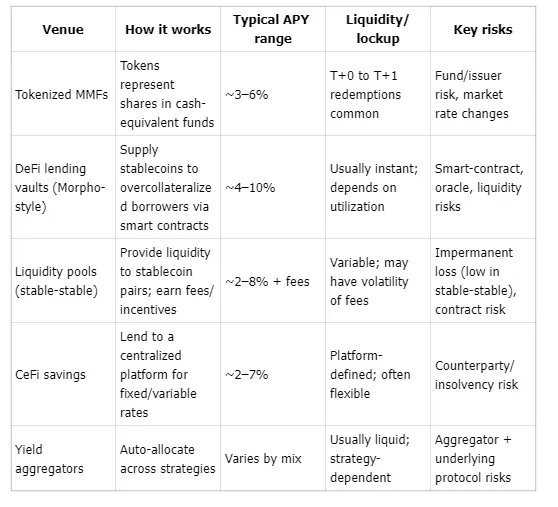
For context on systemic interactions between stablecoins and front-end rates/treasuries, see S&P Global’s analysis Stablecoins, financial stability, and Treasuries.
Infrastructure and Regulated Stablecoin Issuance
The 2026 landscape features bank-grade wallets, white-label issuance, and seamless fiat–stablecoin on/off ramps. Regulatory frameworks (e.g., the EU’s MiCA) push reserve transparency and redemption standards, catalyzing safer, regulated stablecoin platforms best stablecoins to watch in 2026. Financial and payments firms—from banks to consumer fintechs—are expanding issuance, custody, and payment products that unify compliance with user-friendly UX stablecoins became useful in 2025.
How to Evaluate and Deploy Capital in Stablecoins
Use this practical workflow to choose coins, partners, and allocations:
Map regulatory fit
- Confirm your operating regions and licensing needs.
- Verify issuer disclosures, reserve attestations, and redemption policies.
Choose collateral type
- Definition: Collateral type refers to what backs a stablecoin (e.g., fiat reserves, crypto collateral, or algorithmic mix).
- Match use case: Reserve-backed coins for treasury operations; crypto-collateralized for on-chain composability.
Vet partners and custody
- Review security certifications, SOC reports, insurance, and access controls.
- Prefer regulated custodians and audited protocols.
Allocate across use cases
- Segment into operational liquidity, yield, and strategic RWA exposure.
- Size positions by risk tolerance and liquidity needs.
Build on/off ramp redundancy
- Definition: An on/off ramp is a service that converts fiat to stablecoins and vice versa.
- Ensure multiple ramps with card, bank, and regional payment support.
Monitor risks and compliance
- Set alerts for issuer updates, reserve changes, and protocol audits.
- Conduct periodic internal compliance reviews.
Assessing Regulatory Frameworks and Legal Compliance
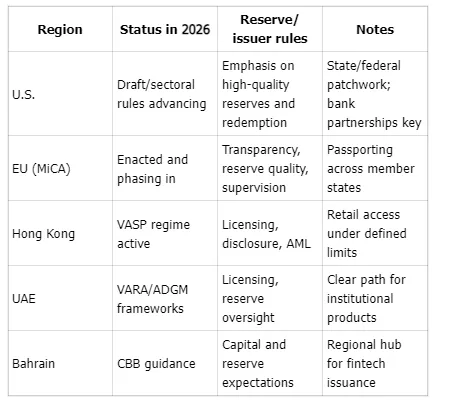
A regulatory framework is a set of laws, policies, and standards put in place to ensure consumer protection and stability within financial markets. In 2026, the U.S. (e.g., proposals like the GENIUS Act), the EU’s MiCA, and VASP regimes in Hong Kong, UAE, and Bahrain provide clearer guardrails on reserves, redemption, disclosures, and licensing—supporting institutional adoption 2026 digital asset outlook.
Regulatory snapshot (high level):
Choosing the Right Stablecoin Collateral Type
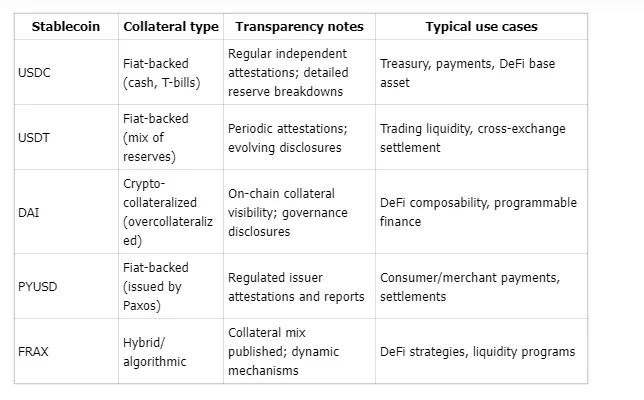
Prioritize reserve-backed stablecoins for treasury and payment functions, using crypto-collateralized or algorithmic models only after comprehensive risk assessment. As a reminder: Algorithmic stablecoins like DAI use smart contracts and collateral rather than bank reserves.
Comparison by collateral class and transparency:
Selecting Secure Custody and Payment Partners
Custody solutions—a secure platform or service responsible for storing and protecting digital assets on behalf of investors. Choose regulated custodians with multi-sig/HSM, SOC 2, insurance, and robust key governance. For payments, prefer partners with proven uptime, AML/KYC controls, and multiple payout rails. Banks are increasingly partnering with or competing against crypto-native providers to offer enterprise-grade custody and settlement payment fintechs push stablecoin tech.
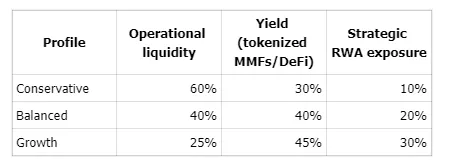
Allocating Capital Across Liquidity, Yield, and Strategic Exposure
A simple three-bucket approach works well:
- Operational liquidity: Working capital, payments, buffers
- Yield: Tokenized MMFs and DeFi lending (Morpho-style) for core income
- Strategic RWA exposure: Tokenized treasuries, bonds, and real estate
Morpho-style DeFi tools can serve as a core, risk-tiered yield sleeve in diversified portfolios Big Ideas 2026.
Sample model allocations (illustrative):
Ensuring Robust On/Off Ramp Infrastructure
Maturing on/off ramps now integrate with local bank rails, cards, and merchant tools so teams can fund, settle, and withdraw seamlessly. Baseline requirements:
- Card and bank integration across regions
- Local payment methods (where permitted)
- Transparent pricing, auditability, and real-time reporting
Definition: An on/off ramp is a service that allows users to easily convert traditional currency (fiat) to stablecoins and vice versa.
Monitoring Risks and Maintaining Compliance
Track these core risks: reserve quality and audits, issuer solvency, smart-contract vulnerabilities, liquidity stress, and evolving regulatory requirements Stablecoins, financial stability, and Treasuries. Best practices:
- Quarterly counterparty reviews and proof-of-reserve checks
- Protocol audit reviews and bug bounty monitoring
- Policy mapping to local rules, plus periodic internal compliance audits
- Automated alerts for issuer disclosures and regulatory updates
Managing Risks and Building Guardrails in Stablecoin Investing
Guardrails convert policy into daily practice:
- Diversify across at least two reserve-backed stablecoins and one DeFi venue.
- Use regulated issuers and custodians; require third-party attestations/audits.
- Set per-venue exposure caps and automated withdrawal triggers.
- Maintain hot/cold wallet segregation and multi-operator approvals.
- Run liquidity drills (e.g., 24–48h redemption tests) and stress scenarios.
- Document incident response and vendor escalation pathways.
Historic algorithmic failures underscore the need for reserve transparency, solvency reviews, and diversification before sizing risk-on allocations best stablecoins to watch in 2026.
ToVest’s Unique Position in Stablecoin-Backed Tokenized Asset Investing
ToVest bridges stablecoin investing with diversified exposure to tokenized U.S. equities and real estate—backed by 24/7 trading, margin tools, and fractional ownership. Clients fund in fiat or stablecoins, settle in real time, and hold assets with institutional-grade cold storage, compliance, and transparent reporting. For investors in Southeast Asia and beyond seeking USD stability and global diversification, ToVest lowers barriers to blue-chip equities and curated RWAs through a single, regulated interface. Explore our academy primer on tokenized assets and stablecoin funding flows at ToVest Academy ToVest Academy, our latest market trends Market trends, and institutional-grade research on tokenized markets Institutional research.
Frequently Asked Questions
What are the regulatory changes supporting stablecoin growth in 2026?
In 2026, frameworks like MiCA in the EU and proposed U.S. rules increase reserve transparency, licensing, and redemption standards, enabling safer, broader adoption.
How can stablecoins help diversify an investment portfolio?
They add low-volatility, dollar-pegged liquidity while unlocking access to tokenized real-world assets and on-chain yields.
What are the safest ways to earn passive income with stablecoins?
Use regulated tokenized money market funds, conservative DeFi lending vaults with audits, and secure, compliant custodians.
What risks should investors watch when investing in stablecoins?
Investors should monitor issuer solvency, reserve transparency, smart-contract vulnerabilities, liquidity stress, and shifting regulations.
How do stablecoins integrate with tokenized real-world assets?
They serve as on-chain settlement currency, enabling faster, global transactions and programmable ownership transfers for RWAs.