The Definitive Guide to Using Crypto Wallets for Tokenized Asset Investment
13 มกราคม 2569
Introduction to Tokenized Asset Investing
Tokenized assets are digital tokens on a blockchain representing ownership or rights in real-world assets like stocks, real estate, or commodities, enabling secure, programmable transfer and settlement on-chain. By converting off-chain value into on-chain tokens, investors gain fractional access, 24/7 markets, and transparent audit trails that traditional rails struggle to match. The momentum is broad-based across asset types—from treasuries and real estate to commodities and private equity—driven by both DeFi protocols and regulated platforms, as cataloged by Kaleido’s overview of tokenized assets. In short, blockchain investing is making diversified, global, always-on portfolio construction practical for more investors, with tokenized securities and other RWA investing options now a realistic complement to traditional allocations.
Benefits of Tokenized Asset Investing for Portfolios
Tokenized assets can enhance diversification and liquidity while lowering operational friction. Fractional ownership reduces minimums, 24/7 markets improve access, near-instant settlement compresses counterparty risk, and tokenized assets can often be used as collateral within crypto lending markets for credit or yield opportunities, as highlighted by XBTO’s RWA overview and Edge of NFT’s use-case analysis. For example, tokenized real estate lowers entry barriers and can channel rental flows more efficiently, while tokenized commodities gain from transparent custody and reduced settlement costs.
Table: Traditional vs. tokenized holdings
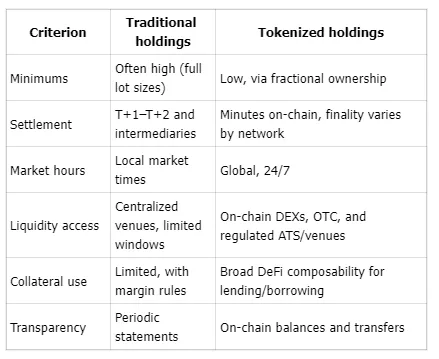
Composability is a distinct benefit: tokenized assets can plug into DeFi for secured borrowing, market-making, or conservative yield, provided the protocol is well-audited and risk-managed.
Understanding Crypto Wallets and Their Role in Tokenized Asset Investment
A crypto wallet is a digital tool that stores your private keys and signs transactions so you can securely hold, send, and receive blockchain-based assets, including tokenized securities and RWAs; some wallets also integrate swaps and portfolio views. Wallets connect you to tokenization platforms, enforce transaction integrity, and are central to custody, compliance, and operational security in blockchain investing. Core concepts: crypto wallet types, wallet security, DeFi wallet connectivity, and token storage standards.
Types of Crypto Wallets for Tokenized Assets
Choosing the right wallet hinges on control, compliance needs, and scale.
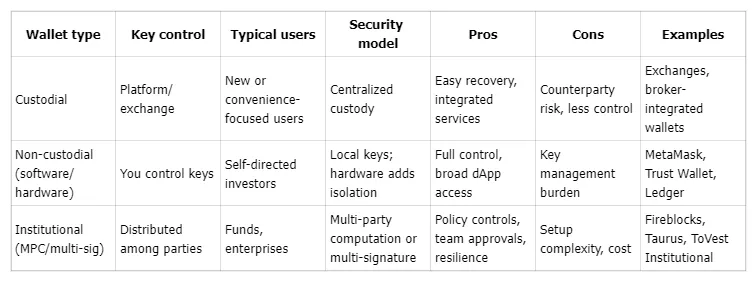
Definitions for snippet capture:
- Multi-sig wallet: A setup where multiple private keys must approve a transaction before it executes.
- MPC wallet: A cryptographic scheme that splits a private key among parties/devices, enabling secure signing without ever reconstructing the full key in one place++.
Key Considerations When Choosing a Wallet for Tokenized Assets
Focus on a wallet’s custody model, supported networks/token standards, smart contract safety, and compliance integrations. Verify asset provenance and oracle sources—especially proof-of-reserves for custodial RWAs—since oracles like Chainlink provide verifiable reserves data and real-world price feeds to smart contracts. Legal structure matters: whether tokens convey a direct claim or via an SPV affects bankruptcy risk, redemption rights, and investor protections—review offering documents and legal opinions carefully.
Checklist for wallet selection:
- Security: hardware support or MPC/multi-sig; robust backups and device security
- Compatibility: ERC-20/other standards; network support; corporate policy controls
- Provenance: issuer docs, audits, custody attestations, proof-of-reserves/oracle integrity
- Compliance: KYC/AML support, geographic restrictions, reporting integrations
- Operations: recovery workflows, role-based access, and signing policies
How to Invest in Tokenized Assets Using a Crypto Wallet
Follow a disciplined workflow from custody choices to transaction execution and reporting. Prioritize audited contracts, diversified exposure, and secure key management. This investing workflow applies to both retail and institutional investors and places crypto wallet setup, tokenized asset due diligence, and compliance at the forefront.
Step 1: Decide on Custody Model
Weigh control versus convenience and operational scale.
- Non-custodial: Pros—sovereign control, censorship resistance, direct dApp access. Cons—self-custody risks, recovery responsibility. Best for smaller portfolios or experienced retail.
- Custodial/MPC: Pros—policy controls, approvals, team workflows, SLAs. Cons—platform reliance, fees. Best for funds, treasuries, or higher-value mandates.
Step 2: Select and Set Up a Compatible Wallet
Choose fit-for-purpose wallets: MetaMask/Trust Wallet/Ledger for retail; Fireblocks/Taurus for institutional teams; ToVest offers seamless integration for easy asset management. Enable strong backups (seed phrases/hardware recovery), test restores, and require device confirmations or multi-factor approvals. Confirm support for required token standards (e.g., ERC‑20, ERC‑1400/security tokens) and target chains.
Step 3: Choose a Reputable Tokenization Platform
Vet platforms on governance, disclosures, and liquidity. Review offering documents, SPV structures, redemption mechanics, audit results, and compliance track record. Favor platforms with transparent collateral, active secondary markets, and clear investor rights. QuickNode’s review of top RWA tokenization platforms is a helpful landscape map.
Step 4: Verify Token Contracts and Oracle Feeds
Confirm the official token contract address via the issuer’s website or documentation and review audit reports when available. An oracle is a blockchain service that provides verified off-chain data—such as prices or proof-of-reserves—to smart contracts; Chainlink’s Proof of Reserve is a leading example. Validate reserve attestations, auditor credentials, and data update frequency before allocating capital.
Step 5: Connect Wallet and Execute Transactions Securely
Connect through the platform’s verified URL or app, confirm permissions, and double-check the token, network, and amount on your wallet device. Reject unsolicited approval requests, limit approvals when possible, and prefer on-device confirmations (especially with hardware wallets). After execution, record transaction hashes and save related documents.
Step 6: Consider DeFi Strategies and Risk Controls
Tokenized assets can be used for lending, liquidity provision, or conservative yield, including borrowing against tokenized RWAs on vetted protocols (Edge of NFT highlights such collateralized use cases). Yield farming typically involves supplying assets to DeFi protocols in exchange for interest, fees, or incentive tokens; returns vary and are subject to smart contract, liquidity, and market risks. Use audited venues, set conservative loan-to-value limits, and segregate collateral across platforms.
Step 7: Maintain Records and Monitor Compliance
Keep complete transaction records, wallet addresses, hashes, and statements for tax, audit, and internal controls. Expect KYC/AML on most platforms and evolving rules by jurisdiction. Establish a recurring checklist: reconcile holdings, refresh attestations/audits, review regulatory updates, and document approvals and signatory actions.
Tokenized Asset Platforms Offering the Best Liquidity
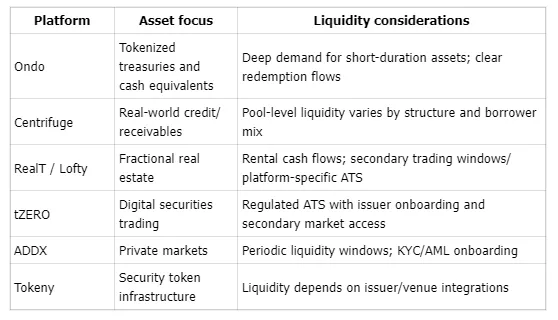
Liquidity stems from active secondary markets, transparent redemption, consistent pricing/oracles, and a broad base of investors. Prominent platforms include Tokeny (security token infrastructure), RealT (U.S. rental properties), Lofty (fractional real estate), Centrifuge (credit/receivables), Ondo (treasuries/cash equivalents), tZERO (ATS for digital securities), ADDX (private market access), and Kaleido (enterprise tokenization tooling).
Table: Example platforms and liquidity notes
ToVest’s platform is built for compliant, high-speed execution with real-time data and multi-asset access, aiming to bridge traditional securities and on-chain liquidity within regulatory guardrails.
Regulatory and Security Considerations for Wallet-Based Investing
Regulation shapes rights and risks. In the EU, MiCA advances token market structure; many jurisdictions run sandboxes for tokenized securities. In the U.S., the SEC’s “crypto mom” has reiterated that tokenized securities are still securities, underscoring the need for registration or exemptions where applicable (Reuters reporting). An SPV is a legal entity that holds underlying assets and issues tokenized claims; investors should assess bankruptcy remoteness, priority of claims, and redemption rights carefully (Buzko Legal). For broader global context, Katten’s analysis maps opportunities and challenges in tokenization.
Security spans wallet and protocol layers:
- Wallet: hardware or MPC, strict key management, offline backups, device-level confirmations
- Protocol: third-party audits, mature oracle design, rate limits/pauses, insurance where available
- Operational: role-based approvals, transaction policies, and incident response plans
Consult legal and compliance experts for large or institutional allocations.
Best Practices and Safeguards for Managing Tokenized Asset Investments
- Prefer audited smart contracts and verifiable oracle feeds with documented proof-of-reserves where relevant.
- For high-value RWAs, consider institutional custody (MPC/multi-sig) with policy controls and SLAs.
- Diversify across issuers, assets, and platforms; monitor liquidity and redemption mechanics.
- Require external evidence: custodian attestations, vault confirmations, valuations, and legal opinions.
- Reconcile on-chain records with platform statements; test recovery procedures quarterly.
Quick-reference safeguards:
- Keys: hardware or MPC; secure backups; access policies
- Contracts: audits reviewed; contract addresses verified
- Oracles: proof-of-reserves/prices validated; update cadence known
- Legal: SPV/claim structure clear; redemption rights documented
- Reporting: tax and compliance logs maintained; regulatory changes tracked
Future Outlook for Crypto Wallets and Tokenized Asset Markets
Wallets are evolving toward multi-chain compatibility, instant swaps, and embedded capital markets tools that streamline token discovery, compliance, and settlement. Institutional adoption is accelerating as high-quality collateral—like tokenized U.S. Treasury bills—gains traction in both CeFi and DeFi workflows (Transak’s primer on tokenized T‑bills). Expect clearer rulebooks, more robust MPC and hardware security, and on-chain compliance tooling that bridges regulated venues and DeFi. As American Century notes, tokenization is reshaping asset distribution, potentially compressing costs and widening access as infrastructure matures.
Frequently Asked Questions
What Are Tokenized Assets and How Do They Work in Crypto Wallets?
Tokenized assets are blockchain-based tokens representing real-world assets; you hold and manage them in a crypto wallet just like other digital tokens, with transactions signed by your private keys.
How Do I Add and Trade Tokenized Assets in a Crypto Wallet?
Connect your wallet to a reputable platform, select the tokenized asset, review the contract/address, and execute the trade; the token then appears in your wallet for tracking.
What Wallets Support Tokenized Assets and Are They Secure?
Widely used wallets like MetaMask, Trust Wallet, and Ledger support tokenized assets; security depends on strong key management, hardware/device confirmations, and verified contract interactions.
What Are the Benefits of Using Crypto Wallets for Tokenized Asset Investment?
Wallets provide direct control, fractional access, and 24/7 markets with near-instant settlement, connecting your holdings to DeFi for collateral and yield opportunities.
What Regulatory and Security Risks Should Investors Consider?
Review local securities laws and offering structures (e.g., SPVs), validate audits/oracles, and enforce strict wallet security to mitigate legal, valuation, and smart contract risks.