Fractional US Stock Minimums for 2026: What Investors Need to Know
30 มกราคม 2569
Investors no longer need hundreds of dollars to start building a U.S. equity portfolio. In 2026, most major brokers support fractional share investing, with typical per-trade minimums of just $1–$5, and many have $0 minimum account balances to open and fund an account. This means you can buy a slice of high-priced stocks or ETFs with a small, predictable dollar amount rather than waiting to afford a full share. Below, we explain how fractional shares work, compare broker minimums, outline market and regulatory trends, and show how ToVest lowers barriers even further with commission-free, 24/7 access.

What Are Fractional Shares and How Do They Work
Fractional shares let you buy a portion of a single stock or ETF based on a dollar amount rather than a whole-share count. This makes expensive stocks accessible and allows precise diversification without large cash outlays. In practice, your broker aggregates customer orders to purchase whole shares and then credits each account with the appropriate fraction at the prevailing price. Dividends, gains/losses, and sell proceeds are all allocated proportionally to your fractional position, just as with full shares. For a clear primer, see this NerdWallet explainer on fractional shares (definitions, mechanics, and broker coverage).
A quick illustration:
- Buying $10 of a $3,000 stock results in approximately 0.0033 shares.
- Buying $5 of a $150 stock results in approximately 0.0333 shares.
- Buying $25 of a $250 stock results in approximately 0.10 shares.
Prices change continuously, so actual fractions will vary at execution.
Fractional share investing supports tighter portfolio diversification and smoother dollar-cost averaging—particularly valuable for long-term investors who prefer steady, small contributions. While fractional ownership began in equities, it increasingly includes ETFs and other asset classes as tokenization and digital trading infrastructure mature.
Minimum Investment Requirements for Fractional US Stocks in 2026
In 2026, many brokers allow fractional share trades starting at $1, while several maintain a typical minimum of $5 per trade for thousands of U.S. stocks and ETFs. Numerous platforms also operate with $0 minimum account balances, reducing barriers to account opening and diversification.
Here is a snapshot of common per-trade minimums and coverage:
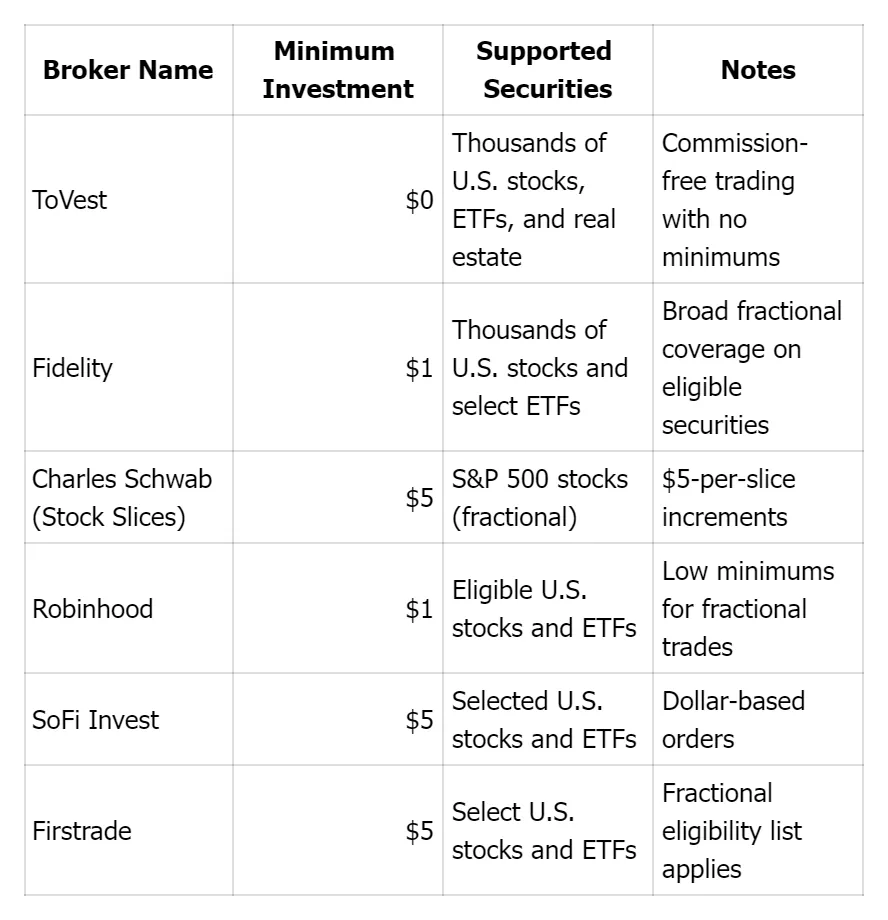
While stocks and ETFs are widely supported, some securities—such as illiquid names, certain ETFs, and mutual funds—may be excluded from fractional trading. Always check the platform’s eligibility list and any fractional share brokerage minimum before placing orders.
How ToVest Enables Commission-Free Fractional Investing with No Account Minimums
ToVest is a regulated fintech platform that leverages blockchain technology for secure, efficient fractional investing across U.S. stocks, ETFs, and real estate. Two things set it apart for small-ticket investors:
- No minimums, no commissions: ToVest requires no minimum account balance and no per-trade minimum, enabling true micro-investing and frequent dollar-cost averaging without fee drag.
- 24/7 access with near-instant settlement: By tokenizing assets and integrating fiat and stablecoin (USDT/USDC) funding, ToVest supports borderless, always-on investing—useful for global users who want to deploy capital on their schedule.
The result: investors can start small, diversify broadly, and scale over time—all in one place that bridges traditional assets and digital funding rails. For platform-specific how-tos and strategies, see ToVest Academy’s practical guides.
Market Trends Driving Fractional Share Accessibility and Tokenization
Three forces are expanding access and lowering entry costs:
- Fractionalization beyond equities: Fractional access is spreading from single-name stocks into ETFs, fixed income, and select alternatives, making diversified portfolios attainable at lower dollar amounts.
- Tokenization of real-world assets: Tokenization represents assets (like stocks or real estate) as digital tokens on a blockchain, enabling fractional ownership, enhanced liquidity, and 24/7 trading—an approach many asset managers and fintechs are piloting.
- Mainstream adoption since 2019: Fractional investing is now a standard feature across most major brokers, with very low minimums and broader ETF support, a trend echoed in industry outlooks and fintech reporting.
Stablecoins such as USDT and USDC further enable 24/7, cross-border investing by providing fast, programmable settlement and funding . For deeper trend coverage, explore our market briefings.
Regulatory and Compliance Considerations for Fractional Stock Investment
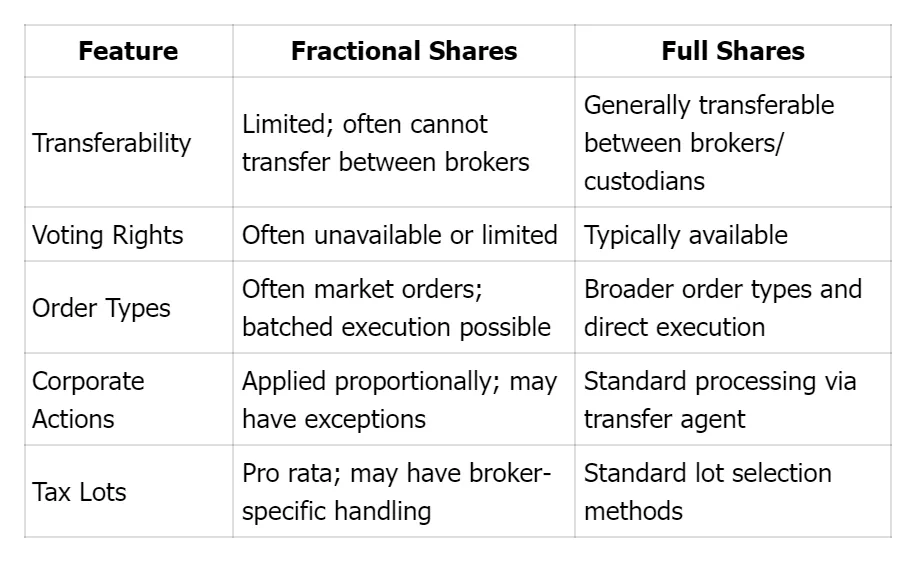
Regulators across the U.S., UK, EU, and Asia are sharpening guidance on fractional custody, order handling, disclosures, and investor rights—improving clarity while preserving innovation. A core concept is omnibus (pooled) custody, where fractions are held collectively at the broker/custodian rather than as individually registered positions; this can affect transferability and voting processes. Rights attached to fractional shares (e.g., voting, participation in certain corporate actions) may differ from whole shares, and disclosure standards are evolving.
Recent discussions—such as ESMA’s considerations under MiFID II and ongoing SEC/FINRA dialogues—signal more standardized rules and investor protections through 2025–2026.
Best practices:
- Review your broker’s disclosures on custody, eligible securities, order types, and how corporate actions are applied to fractions.
- Understand tax reporting and how fractional positions may affect transferability or voting.
- Monitor regulatory updates that could change execution, disclosures, or cross-border access.
Risks and Limitations of Investing in Fractional Shares
Key fractional investing risks and limitations to consider:
- Pooled/omnibus custody can shape how securities are transferred or voted (custody and transferability).
- Fractions often lack voting rights and may be harder to transfer or move between brokers.
- Order routing and batching can influence execution prices, especially where only market orders are supported.
- Coverage gaps: not all brokers or asset types (e.g., certain ETFs, mutual funds) are eligible.
- Tax lot handling may differ from standard shares; market risk (price decline/loss) remains fully pro rata.
Comparison at a glance:
Practical Tips for Investors Using Fractional Shares in 2026
- Verify the platform’s fractional stock minimums, product eligibility (stocks and ETFs), and fee schedule before you trade StockBrokers.com guide to fractional brokers.
- Read disclosures on custody, voting, and how corporate actions (splits, mergers, dividends) apply to fractional positions.
- Use dollar-cost averaging and percentage-based allocations to diversify steadily with small buys.
- Review annual tax forms and lot reporting to understand basis, gains, and income for fractions.
- Track regulatory updates through 2025–26 to anticipate changes in execution and rights Norton Rose Fulbright on regulatory approaches.
- For platform tips and market context, explore ToVest’s analytics and insights ToVest market report.
Frequently Asked Questions about Fractional US Stock Minimums
What is the minimum investment needed for fractional US stocks?
Most major brokers in 2026 let investors start with $1 or $5 per trade, enabling access to high-priced stocks and ETFs with small amounts.
Do I need a minimum account balance to use fractional investing at ToVest?
No. ToVest supports commission-free investing with no account minimum, funded via fiat or stablecoins.
Can I buy fractional shares of ETFs as well as individual stocks?
Yes. Many platforms, including ToVest, support fractional shares of eligible U.S. stocks and ETFs.
What happens to dividends earned on fractional shares?
Dividends are credited proportionally based on your fractional ownership.
Can I sell my fractional shares anytime or are there restrictions?
You can generally sell at any time via market orders, though execution methods and eligible securities vary by broker.
Are there any extra risks with fractional shares versus whole shares?
Market risk is the same, but fractional shares may lack voting rights, be less transferable, and rely on batched execution.