How to Securely Start Blockchain Stock Trading and Avoid Common Pitfalls
January 21, 2026
Getting started with blockchain stock trading is simpler—and safer—when you follow a structured plan. At its core, you’re trading tokenized stocks: digital representations of real-world equities recorded on a blockchain for transparent settlement and fractional ownership. To avoid common pitfalls, begin with a compliant platform, secure your accounts with multi-factor authentication, test every transfer with small amounts, and only interact with audited smart contracts. This guide walks you through the essential steps, from clarifying goals to layered security and ongoing monitoring, with a special focus on benefits for international users who value 24/7 market access, compliance, and efficient settlement.

Understand Blockchain Stock Trading Basics
Blockchain stock trading refers to buying and selling equities that are represented as digital tokens on a blockchain. In plain terms: “Tokenized stocks are digital representations of real-world equities issued on blockchain platforms, making trading, settlement, and verification more efficient.” In traditional markets, trades often settle in days; on-chain settlement can be near-real-time with immutable records and transparent auditability.
A blockchain is a distributed ledger where transactions are batched into blocks and validated by a network, enhancing integrity and traceability of ownership changes. For a primer, see this plain-language overview of blockchain fundamentals from Investopedia. Tokenized stocks are typically collateralized or synthetically mirrored and can enable fractional ownership, 24/7 trading, and programmable compliance. For mechanics and models, Gemini’s explainer on tokenized stocks outlines how token issuance, custody, and redemption can work in practice.
Markets are moving toward blockchain-native infrastructure. Research highlights institutional pilots—such as Nasdaq Linq for private securities and municipal initiatives in Shanghai—showcasing smart contract adoption across capital markets. That said, tokenized equities involve distinct risks around regulation, custody, and price tracking; Bankrate provides a balanced rundown of these risk factors.
Clarify Investment Goals and Risk Tolerance
Before trading, decide whether you’re investing for years or actively trading for short-term moves. A long-term approach might mean holding blue-chip tokenized equities; active trading focuses on frequent entries and exits with stricter risk controls. Clarifying goals and risk tolerance is the first step to managing risk effectively in blockchain stock trading.
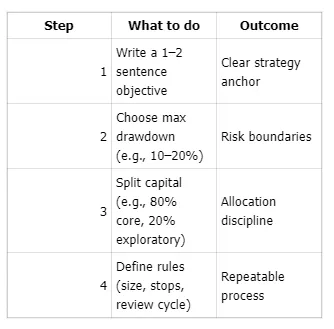
Use this quick process to shape your plan:
- Define your objective: growth, income, or diversification.
- Set a time horizon and drawdown limit.
- Allocate capital by risk band (core vs. experimental).
- Commit to rules: position sizing, stop-losses, and rebalancing cadence.
Choose a Reputable and Compliant Trading Platform
A compliant trading platform upholds regulatory standards (KYC/AML), implements robust security, and manages user data transparently. Vet platforms for licensing, independent audits, and an accessible privacy policy. In the U.S., regulators are actively exploring frameworks for blockchain-based stocks; Fortune reports that evolving SEC plans could reshape how venues offer tokenized equities, underscoring the importance of compliance.
Evaluate critical features:
- Strong KYC/AML procedures and jurisdictional licensing.
- Insurance coverage or risk-mitigation programs for digital assets.
- Verified uptime and 24/7 multilingual support.
- Cold storage or secure custody arrangements.
- Transparent fee schedules and withdrawal policies.
ToVest emphasizes global accessibility, rigorous compliance, and secure settlement for fractionalized U.S. assets and real estate. Learn about our standards and governance on the ToVest About page.
Secure Your Trading Accounts and Digital Assets
Turn on multi-factor authentication for every account and admin action. Multi-factor authentication requires at least two independent credentials (for example, a password plus an authenticator app), dramatically raising the bar against account takeovers. Use strong, unique passwords stored in a trusted manager, and avoid reusing credentials across services.
For custody decisions:
- Hardware wallets are recommended for large or long-term holdings because they keep private keys offline.
- Custodial solutions can be convenient for frequent trading but introduce counterparty risk; minimize hot-wallet balances.
Platform operators should encrypt user data in transit and at rest, enforce HTTPS, and hash passwords prior to storage, among other best practices, as detailed in Openware’s security guidelines for crypto platforms.
Verify Addresses and Conduct Test Transactions
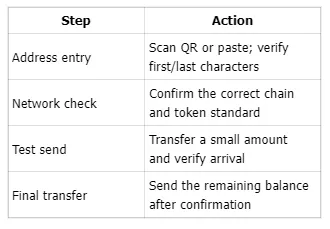
User error is a frequent cause of loss. Always double- or triple-check recipient addresses, ideally by scanning QR codes to eliminate manual entry mistakes. When moving significant value, first send a small test transaction, confirm receipt, and only then transfer the full amount. These small habits consistently prevent costly errors and align with common-sense “avoid-the-mistake” playbooks for digital asset transfers.
Verification checklist:
Use Vetted Smart Contracts and Security Tools
Only interact with smart contracts that have undergone independent audits. A smart contract audit is a formal review by security experts to identify vulnerabilities, logic flaws, or misconfigurations in on-chain code. Prefer contracts with public audit reports, active bug bounty programs, and ongoing monitoring.
Security toolsets can help:
- Audit and analysis: MythX and Semgrep for static/dynamic analysis.
- Runtime monitoring: Forta for real-time threat detection.
- Key management and code scanning: broader suites highlighted in Alchemy’s roundup of blockchain security tools.
Privacy-enhancing technologies like zk-SNARKs are maturing, enabling private verification and improving scalability—useful for confidential order flows and compliance-friendly proofs without exposing sensitive trading data.
Implement Layered Security and Compliance Measures
Multi-layered security means combining several defenses—encryption, role-based access, secure coding, and monitoring—to achieve stronger overall protection. Core measures to expect from platforms and to apply in your own processes include:
- Secure coding practices (e.g., parameterized queries to prevent injection flaws).
- Role-Based Access Control with least-privilege defaults.
- End-to-end encryption for data in transit and at rest.
- Automated security testing, continuous compliance checks, and policy enforcement, as summarized by Rapid Innovation’s best-practices guide.
Comprehensive KYC/AML and transparent privacy disclosures are nonnegotiable pillars when dealing with tokenized securities and cross-border users.
Prepare Incident Response and Disaster Recovery Plans
Even with strong defenses, incidents can occur. An incident response plan documents immediate steps to contain damage and accelerate recovery after a breach. A disaster recovery plan ensures business continuity and data integrity during major outages or system failures.
Preparation steps:
- Run regular breach scenario drills and tabletop exercises.
- Maintain secondary infrastructure and offsite, verified backups.
- Establish clear escalation paths, on-call rotations, and post-incident reviews.
Practice Trading in Simulated Environments
Simulated or paper trading lets you practice strategies, order types, and platform navigation without risking capital. Use demo accounts or testnets to validate execution flow, slippage assumptions, and stop-loss behavior. Graduating from a successful simulation to small, real trades helps refine your edge and build confidence, especially for new entrants.
Monitor Trading Activity and Continuous Learning
Ongoing monitoring reduces risk as conditions evolve. Leverage analytics to flag anomalies—tools like Chainalysis and Forta are widely referenced in overviews of production blockchain applications and threat detection. Augment this with AI-powered detectors to spot new attack patterns and protocol changes in real time, as cataloged by QuickNode’s roundup of AI tooling.
Stay current with:
- Platform release notes and security advisories.
- Regulatory updates in your trading jurisdictions.
- New audit reports, bug bounties, and tooling upgrades.
Continuous monitoring and active learning are critical to safe and successful blockchain stock trading.
Benefits of Blockchain Stock Trading for International Users
Blockchain rails reduce frictions for global investors. Key advantages include:
- 24/7 access to premium U.S. assets with fractional ownership for right-sized positions.
- Fewer dependencies on local brokers or restrictive banking corridors.
- Greater transparency and near-real-time settlement for cleaner audit trails.
Interoperability is advancing via hybrid frameworks—such as PACT-style architectures that bridge ISO 20022/FIX-compliant APIs with zero-knowledge proofs—for seamless, private, and auditable cross-border transactions. Oracles and cross-chain services further connect traditional markets with tokenized equities, as explained in Chainlink’s education hub on tokenized stocks.
Popular use cases:
- Hedging currency risk against domestic inflation or FX volatility.
- Diversifying into U.S. stocks and real estate from abroad.
- Reducing cross-border fees and settlement delays.
Frequently Asked Questions
Can I use crypto wallets for blockchain stock trading?
Yes—supported wallets can be used to deposit and withdraw digital assets; always confirm wallet and network compatibility and verify addresses before transfers.
How do I start blockchain stock trading securely?
Choose a reputable, compliant platform like ToVest, enable MFA and other security settings, and practice with a simulator or testnet before committing real funds.
What benefits does blockchain stock trading offer to international investors?
You get 24/7 access, fractional ownership, and faster settlement with transparent compliance, often without relying on local brokers or limited banking rails.