eToro vs. Fidelity: Best Crypto‑to‑Stock Transfer Options in 2026
January 16, 2026
Transferring value from crypto into stocks in 2026 typically means selling your coins for cash, then using those proceeds to buy equities. Between eToro and Fidelity, neither offers a true one‑tap, direct crypto-to-stock conversion. eToro is faster if you want both crypto liquidation and stock buying under one roof; Fidelity excels in execution quality, research, and long‑term custody once you’ve moved cash in. For investors who want instant, on‑chain conversion into fractionalized U.S. equities, platforms like ToVest that support tokenized stocks funded by crypto avoid the liquidation-and-transfer shuffle altogether. Below, we explain the mechanics, fees, and best‑fit use cases so you can choose the smoothest path for your situation.

Overview of Crypto-to-Stock Transfer Options
A crypto-to-stock transfer is the process of selling cryptocurrency for fiat (USD), then using the cash to purchase stocks—either within the same platform or after moving funds to a brokerage account. Direct conversion means swapping value between asset types without off‑platform steps. As of 2026, major U.S.-regulated platforms segregate crypto and securities rails; that’s why users generally liquidate crypto and move cash before buying stocks. Fidelity explicitly guides clients to sell crypto externally, then fund their brokerage account to purchase equities, underscoring the lack of direct conversion paths at legacy brokers (see Fidelity’s guide to moving crypto). Likewise, eToro offers both asset classes under one login, but you still sell crypto to USD before placing a stock order; there’s no native crypto-to-stock swap button, a common design among U.S. platforms highlighted in StockBrokers.com’s crypto exchange guide.
eToro Platform Features and Crypto Integration
eToro is a multi‑asset platform with stocks, ETFs, and a broad roster of cryptocurrencies in one account. Its social investing tools—CopyTrader and Smart Portfolios—appeal to newer investors who want ideas and education alongside execution, and its user base spans more than 25 million across 75+ countries, according to Investopedia’s eToro review. For U.S. market investors, eToro supports $0 commissions on U.S. stocks and ETFs, while crypto trades typically carry a 1% fee plus spreads, with availability varying by state and asset. These features make eToro a practical venue to execute the crypto‑to‑fiat‑to‑stock sequence without switching apps.
There are limits to the integration. You must sell crypto to USD before buying stocks; direct swaps from a crypto position into an equity ticker aren’t supported. U.S. access is also restricted in certain states, and minimum deposits typically range from $50–$100, with a $5 withdrawal fee, per StockBrokers.com’s eToro review. For education, eToro Academy and the social feed add context and confidence for first‑timers—useful when timing your liquidation and stock entry.
Fidelity Platform Strengths and Crypto Limitations
Fidelity is a long‑established U.S. brokerage known for powerful research, robust custody, and $0 online stock/ETF commissions. For active traders, execution quality is a standout—NerdWallet notes Fidelity executed 98.89% of eligible orders at or better than the National Best Bid or Offer—and its Active Trader Pro platform is among the most capable software suites for equities.
On crypto, Fidelity offers a limited lineup (e.g., Bitcoin and Ethereum) with no native wallet for a broad range of assets in the main brokerage. You cannot push coins directly into stock positions. The transfer mechanics look like this:
- Sell crypto on a crypto platform or through Fidelity’s limited crypto product, converting to USD.
- Move fiat to your Fidelity brokerage via ACH or wire (Plaid linking can streamline ACH).
- Buy stocks/ETFs in your Fidelity account.
This approach trades speed for depth: you gain best‑in‑class research, tax reporting, and retirement account integration once funds arrive, but you’ll accept the extra crypto liquidation and funding steps up front.
Comparing Crypto Availability and Transfer Mechanics
Both eToro and Fidelity require a liquidation-to-fiat step before you can invest in stocks. The key difference is where you do it and how much tooling you want for equities versus crypto discovery.
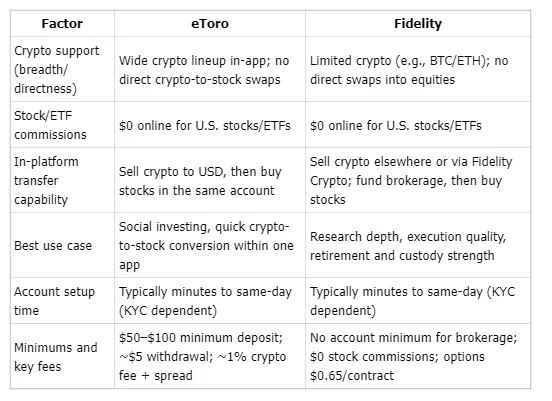
Note: eToro crypto access is unavailable in some U.S. states, and minimums/fees can vary by jurisdiction. Industry‑wide, the segregation of crypto and securities rails means the crypto-to-stock conversion generally happens via fiat, not a direct asset swap .
Fee Structures and Account Usability
Costs shape how much of your crypto ultimately becomes stock exposure.
- eToro: ~1% crypto trading fee plus spreads, $0 commission on U.S. stocks/ETFs, $5 withdrawal fee, and typical minimum deposits of $50–$100. Social features and education can reduce friction as you navigate liquidation timing and reinvestment.
- Fidelity: $0 online commissions for stocks/ETFs, options at $0.65 per contract, and no inactivity fees. The platform’s research, screeners, and planning dashboards help optimize entry prices and portfolio construction once funds arrive (NerdWallet’s Fidelity review).
Quick-reference (fees and usability)
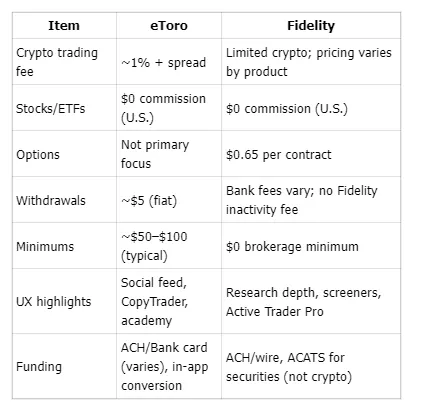
Industry note: Beyond brokers, crypto exchanges continue to improve fiat ramps and fees; for example, Reuters reported Kraken’s commission‑free trading launch in 2025, a trend that can affect your all‑in conversion costs over time.
Practical Recommendations for Crypto-to-Stock Transfers
- If speed and crypto access matter: Use eToro to liquidate crypto and purchase stocks within the same account, monitoring for spreads and the ~1% crypto fee. Confirm state availability and any funding limits before you start.
- If research, execution, and long‑term custody matter: Sell crypto on your preferred exchange, transfer USD to Fidelity via ACH/wire, and buy equities using Fidelity’s tools and price improvement (NerdWallet’s Fidelity review).
Common flows:
- Liquidate crypto → withdraw fiat to bank → deposit into brokerage (ACH/wire) → buy stocks/ETFs.
- Within eToro: sell crypto to USD → allocate to stocks/ETFs in the same account (where supported).
Pro tip: Build in time for settlement, withdrawal holds, and ACH transfer windows so market timing isn’t derailed by operational delays. If you want near‑instant conversion from crypto into stock exposure without leaving the crypto rail, consider tokenized‑stock platforms like ToVest that enable crypto‑funded, fractionalized U.S. equities with instant settlement.
Frequently asked questions
Can I transfer cryptocurrencies directly into stock investments?
No, neither eToro nor Fidelity supports direct crypto-to-stock conversions. You must sell your crypto for cash before purchasing stocks with those funds.
What are the common steps to convert crypto holdings into stocks?
First, sell your cryptocurrency for fiat currency, then deposit the proceeds into your brokerage account to buy stocks.
How do fees impact crypto-to-stock conversions?
Fees, including crypto trading commissions, spreads, and withdrawal charges, reduce the cash that ultimately reaches your stock purchases.
Which method offers faster access to stock trading after selling crypto?
Using a platform that supports both crypto and stock trading, such as eToro, typically shortens the time between liquidation and stock purchase.
What security measures protect funds during crypto-to-stock transfers?
Top platforms use encryption, two‑factor authentication, and regulatory compliance; bank-linked transfers (e.g., ACH) also add verification layers during funding.