2025年11月26日

Tovest – The Real RWA Investment Brand for Southeast Asia’s Young Generation

In an era where digital finance is booming, Tovest is more than just an investment platform — it is a symbol of the bridge between real-world assets and Web3. By bringing real value onto the blockchain, Tovest opens the door to global investment opportunities for young people across Southeast Asia. Global Megatrend: RWA – Not Just a Trend, but the Future RWA (Real-World Assets) is becoming the key connector between traditional markets and blockchain, enabling the digitalization of assets such as real estate, equities, bonds, and commodities. According to the Q3 2025 report, the RWA market has reached around $35.8 billion and continues accelerating. RWA boosts liquidity for traditionally illiquid assets by enabling fractional ownership and 24/7 cross-border trading. Analysts project that the tokenized RWA market could reach trillions of dollars in the coming years. Tovest’s Mission: Leading the RWA Wave in Southeast Asia Technology + Transparency + Risk Management Tovest enables the tokenization of real-world assets — transforming stocks, bonds, commodities, and more into blockchain-based tokens, giving retail investors access to assets once reserved for large institutions. The platform prioritizes maximum transparency, using Proof-of-Reserve and working with trusted custodial partners to ensure every token is truly backed by real assets. Tovest follows strict regulatory and compliance standards, ensuring user protection and building a strong, trustworthy brand foundation. A Vision for SEA – Built for Young Investors Tovest targets young adults in Southeast Asia (ages 22–32), especially those with modest or moderate income — making RWA investment truly accessible even with small capital. With Tovest, users can start investing with as little as 2 USDT to own fractional shares of major global assets like Apple, Nvidia, Tesla, and more — lowering the traditional capital barrier. Tovest’s ecosystem of strategic partners — from investment funds to global fintech firms — enables access to high-quality assets, better liquidity, and a trustworthy investment gateway. Backed by Global Confidence – Tovest Rides the Macro Wave Major institutions like BlackRock are now leading the RWA movement through products such as the tokenized BUIDL fund, signaling strong legitimacy for real-world assets on blockchain. Recent academic research shows that while RWA has massive potential, liquidity remains a challenge — a challenge platform like Tovest is designed to solve through smart architecture and market structure. New technological models (such as cross-chain xRWA frameworks) demonstrate how RWA can expand across multiple blockchains, improving accessibility and scalability worldwide. Why Choose Tovest – Unique Advantages for You Global market access: Invest in U.S. equities, European assets, and global commodities with minimal capital. Transparent fractional ownership: Every token represents a real portion of the underlying asset — no speculation or synthetic models. Safety & trust: Strict compliance, institutional-grade custody, and blockchain transparency. Cost-efficient: Reduced intermediaries mean more of your money goes directly into actual value, not fees. A sustainable investment future: With RWA, you’re not only investing for short-term gains — you are building long-term exposure to a transparent, digital-asset economy. Brand Message Tovest is not just a platform — it is a mission: bringing real-world assets to the blockchain so every young person in SEA can access global markets safely and transparently. We stand at the intersection of traditional finance and the future — where real assets meet Web3 technology. When you invest with Tovest, you are not only investing in assets — you are investing in the future of global finance, where technology and real value converge. #RWA #Tokenization #Apple #Nvidia #Tovest #InvestWith2USDT (Not financial advice – DYOR)

blog banner

2025年12月25日

7 Best Tokenized Stock Platforms for Non‑US Investors in 2025

Tokenized stocks are digital representations of real equities issued on public blockchains, enabling fractional, 24/7 trading via crypto rails without traditional brokerage barriers. For non‑US investors, this can mean simpler access to US names, faster settlement, and the ability to fund and withdraw in fiat, stablecoins, or crypto. As the market matures, choosing the right platform matters for custody safety, liquidity, and legal clarity. Below, we compare leading tokenized stock platforms on access, performance, regulatory posture, and practical fit for different investor needs—drawing on what major issuers and exchanges actually support in 2025 and where they operate. For a landscape view of the most active tickers (e.g., SPYX, AAPLX, COINX), see Webopedia’s overview of the biggest tokenized stocks, which also explains how these markets work at a high level. ToVest ToVest bridges traditional US equities with blockchain flexibility for non‑US investors, offering instant, fractional trading and true 24/7 market access with low‑latency execution and resilient security. Behind the interface, ToVest ensures on‑chain transparency with a defensible custody stack and proof‑of‑reserves reporting so you can verify assets, not just trust claims. The platform’s data layer is built for decision‑making: real‑time market depth, granular historical feeds, and portfolio analytics are integrated with sophisticated, opt‑in leverage and risk controls to support both novice and institutional investors. Globally, ToVest emphasizes consistent access to tokenized US stocks and ETFs, fast settlement finality, and clear disclosures on where assets are held and how they’re segregated. For more on our approach and oversight, see ToVest’s background and governance. Backed Finance Backed Finance is a Swiss‑based pioneer in tokenized stocks and ETFs, issuing instruments across multiple chains with industry‑standard custody. Tokens are structured for legal clarity and issued to common standards such as ERC‑20 (Ethereum) and SPL (Solana), while underlying assets are held with regulated Swiss custodians for enhanced protections and settlement finality. Coingape’s roundup of RWA platforms highlights custodial rigor and proof‑of‑reserves as differentiators in this segment. Backed’s footprint includes widely tracked tokens like AAPLX (Apple), COINX (Coinbase), and SPYX (S&P 500 exposure), which have built meaningful liquidity and awareness across the sector, as summarized in Webopedia’s tokenized stocks overview. Availability is jurisdiction‑dependent, so always verify whether specific tickers are supported in your country and on your chosen exchange. Securitize Markets Securitize offers an institutional‑grade, regulated platform built for compliant token issuance, custody, and secondary trading. It partners with leading custodians and infrastructure providers—including Anchorage, BitGo, Fireblocks, and Copper—while issuing on ERC‑20 rails and supporting multi‑chain operations, giving investors robust settlement and clearer recourse frameworks. Coingape’s RWA platform survey underscores these partner integrations as best‑practice signals. Securitize has become a benchmark venue for advanced on‑chain investment vehicles such as BlackRock’s BUIDL and Apollo’s ACRED, illustrating how tokenization can extend beyond single‑name equities into institutional funds. Global investors benefit from standardized reporting, but should always review each asset’s legal wrapper and local availability before funding. Kraken Kraken is a long‑standing centralized exchange known for conservative compliance, deep liquidity in major markets, and broad global reach. In jurisdictions where tokenized stock products are supported by approved issuers, Kraken’s infrastructure—fiat and stablecoin rails, fast order matching, and robust security—makes it a practical venue for accessing high‑volume pairs and trading outside US market hours. BingX’s guide to xStocks highlights why 24/7 access and stablecoin settlement have been catalysts for demand, particularly in regions with higher brokerage frictions. As with any centralized venue, compare conversion and withdrawal fees, confirm which tokenized equities are legally available in your country, and review listing disclosures to understand rights and restrictions. Bybit Bybit caters to active, crypto‑native traders with fast execution, deep order books, and fractional lots—features that translate well to tokenized equities when supported in your region. Popular tickers such as AAPLX and COINX have become reference markets across the sector, with liquidity patterns described in Webopedia’s coverage of top tokenized stocks. For non‑US investors, Bybit’s advantages include 24/7 trading, stablecoin settlement, and lower minimums. Verify local availability and any regulatory caveats that may apply to tokenized equities in your jurisdiction before trading. Coinbase Coinbase is favored for its regulated custody, operational transparency, and a global user base that supports mainstream liquidity conditions. Its institutional services and conservative compliance approach position it as a natural on‑ramp for tokenized assets, especially for allocators prioritizing custody assurances and detailed reporting. The Motley Fool’s overview of blockchain stocks cites Coinbase’s scale and infrastructure as core reasons institutions engage with the platform. For larger accounts, Coinbase’s negotiated pricing and reporting can simplify both execution and audit workflows. Access to specific tokenized equities varies by region, so check eligibility and rights disclosures prior to funding. Binance Binance remains a dominant global venue with top‑tier liquidity and extensive asset coverage. Where fully supported, its depth of market and seamless transitions between crypto and tokenized exposures can be appealing to non‑US traders who prioritize execution quality. Yellow Research’s survey of must‑have crypto apps notes Binance’s global reach and product breadth as key strengths. Regulatory status and product menus vary by country, and tokenized stock offerings may be limited or unavailable in certain regions. Conduct due diligence on local compliance requirements, listing rights (e.g., dividends, voting), and withdrawal options. eToro eToro blends traditional equities, tokenized assets, and social investing features in a retail‑friendly interface. With a large global user base and commission‑free stock trading in many countries, it offers simple onboarding and educational tools that help new investors navigate emerging asset classes. Yellow Research indicates spread‑based fees around 1% for many crypto/tokenized trades, which can be competitive at smaller sizes. Confirm whether you have direct access to tokenized equities or only synthetic exposures in your region, as product access and legal rights can differ by country. How to Choose the Best Tokenized Stock Platform as a Non-US Investor Use this process to match a platform to your goals and constraints: Confirm legal coverage: Check the platform’s jurisdiction, KYC requirements, and whether tokenized equities are available in your country with full disclosures on rights. Verify custody and reserves: Look for regulated custodians, clear segregation, and proof‑of‑reserves reporting before funding. Coingape’s RWA platform analysis outlines why these are essential. Compare execution and rails: Review 24h volumes, order book depth, trading hours (24/7 vs market hours), and payout options (fiat, stablecoins, crypto). Total cost review: Compare spreads, commissions, withdrawal fees, and currency conversion costs. Fit for purpose: Evaluate data tools, leverage controls, APIs, and support. Quick comparison snapshot: Key Features to Compare in Tokenized Stock Platforms Token standards and security: ERC‑20, SPL, or multichain issuance; platform security controls; insurance coverage. Custody arrangements: A custody arrangement is the structure by which digital or tokenized assets are held, managed, and secured—often via regulated third parties to protect assets and ensure settlement finality. Asset breadth: Coverage of US single stocks, ETFs, fixed income, and real estate. Trading mechanics: 24/7 vs limited hours, fractionalization, leverage options, and API access. Fees: Spread vs commission, withdrawal and network costs, and currency conversion. Data and reporting: Market depth, historical data, tax reports, and proof‑of‑reserves. XBTO’s RWA tokenization primer outlines why these choices matter as standards evolve across assets and chains. Regulatory and Jurisdiction Considerations for Non-US Investors Rules and product availability differ by country; many platforms enforce geo‑restrictions and apply asset‑specific eligibility screens. Coingape’s RWA review emphasizes that custody clarity and disclosures vary by issuer, which directly impact investor rights. Some tokenized stocks may carry reduced rights (e.g., no voting or dividends) or be structured as derivatives rather than direct equity interests. A legal wrapper is the contractual structure giving a tokenized asset its legal standing and rights, including entitlement to dividends, voting, and legal recourse. Review both local investor protections and platform‑level compliance features before you trade. Understanding Liquidity and Custody in Tokenized Stock Trading Liquidity is the ease and speed with which a tokenized asset can be bought or sold without significantly moving the price. In 2025, SPYX (tokenized S&P 500 exposure) reached an estimated $10.3M market cap, while AAPLX and COINX hovered near $2.0M and $1.9M, respectively, with daily volumes that vary by venue, per Webopedia’s sector snapshot. Liquidity can cluster on certain exchanges and pairs, so always check 24h volume and order book depth where you plan to trade. Leading issuers rely on regulated custodians and robust reserve disclosures. Comparing proof‑of‑reserves and custody partners—and confirming how claims are audited—can materially reduce counterparty risk relative to opaque setups. Frequently Asked Questions What are tokenized stocks and how do they work? Tokenized stocks are blockchain‑based representations of real stocks, allowing investors to trade fractional shares 24/7 via crypto rails, typically backed by custodians holding the underlying exposure. How can non-US investors access tokenized US stocks safely? Choose platforms with regulated custody and proof‑of‑reserves, and confirm your country’s eligibility and asset rights before funding. What are the typical fees involved in trading tokenized stocks? Expect spreads, potential commissions, withdrawal/network fees, and currency conversion; high‑liquidity tickers generally have tighter spreads. Are there risks associated with tokenized stock platforms? Yes—jurisdictional differences in protections, custody/counterparty risk, liquidity variability, and potentially limited rights compared to traditional shares. How do custody arrangements affect investor protections? Regulated, transparent custody enhances protection and recourse in disputes or insolvency, while opaque setups raise the risk of default and rehypothecation.

blog banner

2025年11月21日

“The RWA Boom Is Here, But Safety Is the Blade”,2025 Skynet Report In-Depth Analysis: The Risks and Order of the On-Chain Golden Age

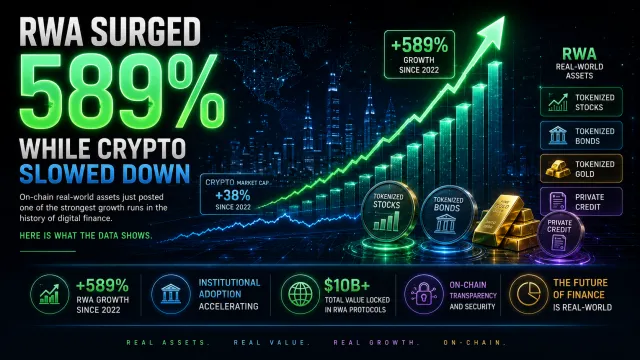
Introduction From $26 billion to a future trillion-dollar market, RWA is becoming the bridge between DeFi and TradFi. But on the other side of this bridge, is it scenery — or a storm? Preface: RWA Is Hot, But Do You Really Understand It? Imagine blockchain as a huge city. In the past few years, DeFi was the busiest commercial street, NFTs were the trendiest art district, and GameFi was the flashy amusement park. And now, a new highway — RWA — is rapidly transporting real-world assets like treasuries, gold, and receivables into this on-chain city. As the “financial hub,” RWA in 2025 can truly be described as dazzling. According to the 2025 Skynet RWA Security Report, as of mid-2025 the total RWA market surpassed $26 billion, a 5x growth since 2022. What kind of speed is that? It’s like a small town turning into a global metropolis overnight. RWA is no longer a “future trend” — it is the “present continuous tense.” But the hotter it gets, the more we need to stay cool. The Skynet RWA Security Report not only shows RWA’s prosperity, but also exposes the hidden risks and structural vulnerabilities behind it. This article will break down the report, helping you understand both the “boom” and the “risks” of RWA, and how it may reshape Web3 and even the global financial landscape. 2025 Skynet RWA Security Report In-Depth Analysis Core Point 1: RWA, The New Digital Asset Continent — Who’s Leading? The report first released the Skynet RWA Ranking (Top 10, H1 2025) — the most representative global RWA projects: BlackRock BUIDL: Treasuries Franklin Templeton On-Chain Fund: Treasuries Ondo Finance: Treasuries + Yield Paxos Gold: Gold Tether Gold: Gold Binance RWUSD: Stablecoin Ethena USDtb: Stablecoin + Yield Centrifuge: Receivables Usual: Emerging Stablecoin SKY (MakerDAO RWA Vaults): RWA Aggregation Pool This ranking is interesting: it’s not just based on market cap, but a comprehensive score combining compliance, reserve transparency, security structures, and institutional-grade operations. The report pointed out that these projects share several traits: Clear legal frameworks: Most are registered in regulated jurisdictions with designated custodians and auditors. Transparent proof-of-reserves: Leading projects release weekly reserve reports with third-party audits. Institutional-grade risk control: From multi-signature setups to legal contracts and on-chain governance mechanisms. From TradFi giants like BlackRock and Franklin Templeton, to DeFi-native projects like MakerDAO and Ondo, what we are seeing is a hybrid trend: It’s not simply a “marriage between TradFi and DeFi.” Instead, the decentralized world is learning risk management from TradFi, while traditional finance is attempting to “go native on-chain.” And beyond that, these projects also show both strong commonalities and unique traits: Commonalities: Highly compliant, transparent reserves, institutional-grade security — they are the “face” of the RWA industry, representing the highest standards. Core Point 2: RWA’s Value Proposition — Where’s the Real Strength? If you had to sum up RWA in one sentence: “RWA is the bridge that allows on-chain finance to truly connect with real-world value.” And this bridge shines in three ways: 1. Unlocking real asset liquidity For example, tokenized U.S. Treasuries: assets that once required days of settlement and six-figure entry amounts can now circulate freely on-chain in units as small as $1. 2. Giving stablecoins “real yield” Traditional stablecoins like USDT/USDC don’t generate yield. But projects like Ethena USDtb return Treasury interest to holders. Holding a stablecoin becomes automatic yield farming. 3. Bridging TradFi and DeFi Institutional inflows into RWA improve on-chain asset quality and upgrade DeFi itself. Lending platforms can use RWA as collateral to lower volatility. Core Point 3: $26 Billion — A Quiet Explosion One number in the report was jaw-dropping: by mid-2025, the RWA market had reached $26 billion, compared to $5 billion in 2022 — a more than 5x growth. And this is just the beginning. BCG predicts $16 trillion worth of assets could be tokenized by 2030. Why so fast? CertiK summarized three main drivers: U.S. Treasuries as the entry asset Tokenized Treasuries grew 400% year-over-year, becoming the gateway for institutions. Safe, stable yield — perfect as foundational RWA. New trend of yield-bearing stablecoins Some RWA-backed stablecoins distribute Treasury interest to holders — “yielding stablecoins.” This may challenge the dominance of USDT/USDC. Deep involvement of TradFi giants BlackRock, Franklin Templeton, and others raised the trust bar, pushing compliance and transparency standards into the mainstream. And importantly — this growth wasn’t fueled by “airdrops, farming, or mining.” It was driven by real assets and real institutional capital. Core Point 4: Don’t Just Look at the Boom — Safety Is the Blade RWA is not just a “move to chain.” It’s a multi-dimensional project spanning law, custody, data, oracles, and compliance. CertiK noted: “RWA’s risks go far beyond traditional smart contract auditing.” Risk evolution: 2023–2024: Mostly off-chain credit defaults — borrowers not repaying. H1 2025: Total losses surged to $14.6 million — but this time the culprits were on-chain operational and technical risks. This shift is crucial: Early RWA = biggest risk was off-chain (borrower default). Now = biggest risk is on-chain (code bugs, oracle failures). That’s the signal: RWA has entered a “technical governance risk” era. You might think you’re investing in Treasuries, but in reality one oracle bug could wipe you out. This is true “tech finance.” Core Point 5: CertiK’s Five-Layer Security Stack — The “CT Scan” of RWA One of the most valuable contributions of the report: the Five-Layer Security Stack. Think of it as an RWA “human anatomy chart.” Each layer is a potential risk hotspot: Asset Layer: Do the real assets exist? Are they legally enforceable? Legal Layer: Is there a valid legal framework? Is regulation clear? Operational Layer: Are custodians and operators compliant? Is governance multi-sig and transparent? Data Layer: Are oracles reliable and decentralized? Any manipulation risks? On-Chain Layer: Are contracts audited? Any bugs? Is access control robust? Any weak link = loss of funds or collapse of trust. Based on this, CertiK also launched the Skynet RWA Security Scoring Framework, evaluating projects across six dimensions: asset authenticity, legal compliance, operational transparency, oracle reliability, contract security, and governance robustness. Its value: Letting users know if a protocol is trustworthy. Giving institutions and regulators a standard to measure risk. Building a transparent “trust layer” for the entire industry. Example: some projects may have real Treasuries, but all control sits in one multisig wallet. That’s high on “Asset Layer,” but low on “On-Chain” and “Governance.” Core Point 6: Three Lessons for the Industry From deep reading and structured analysis, here are three takeaways: RWA is standardizing, but not de-risking RWA is moving toward institutionalization — audits, proofs-of-reserve, on-chain governance. Investors can “see and verify.” But risk isn’t gone — it’s just more visible and traceable. In fact, RWA is more complex than pure DeFi because it spans both on-chain and off-chain governance. 2. The main threat has shifted from credit default to technical governance 2025’s biggest losses weren’t bond defaults — they were: Oracle manipulation distorting collateral ratios. Multisig hacks draining funds. “Emergency withdrawal” functions abused by teams. Reserve proofs delayed or falsified. Once assets are digitized, the digital layer itself becomes the weakest link. Which means security and compliance governance must be integrated. 3. No “universal ruler,” but the Security Stack is a radar The Five-Layer Stack and Skynet Framework aren’t there to tell you “invest or not.” They’re there to help you check: Is custody legal? Is the oracle centralized? Is the contract open source and audited? Is governance concentrated in one team? For institutions, regulators, and even retail users — this is a very practical radar. Core Point 7: Five Sentences You Should Remember RWA is digitizing real assets — it’s not a castle in the sky, but it’s not risk-free either. By 2025, RWA market size has hit $26B, with potential 100x growth over the next decade. Main risks have shifted from credit default to on-chain technical and governance failures. CertiK’s Five-Layer Security Stack is an effective risk scanning framework. In the RWA marathon, compliance, security, transparency, and technical strength will decide who lasts. Final Words: The Future of Finance Is More Than Just “On-Chain” RWA is Web3’s deep evolution. It’s no longer satisfied with “virtual economy,” but instead seeks full integration with real-world assets, institutions, laws, and regulators. It’s both an opportunity and a challenge. As CertiK said in the report: “RWA security has become the key question for Web3’s healthy growth.” This isn’t a slogan — it’s reality. Because in a market that could reach $16 trillion, risk management will be the line between survival and collapse.

blog banner
;
ブログ | ToVest