2025年12月19日

7 Regulated Platforms to Trade Tokenized US Stocks with Crypto

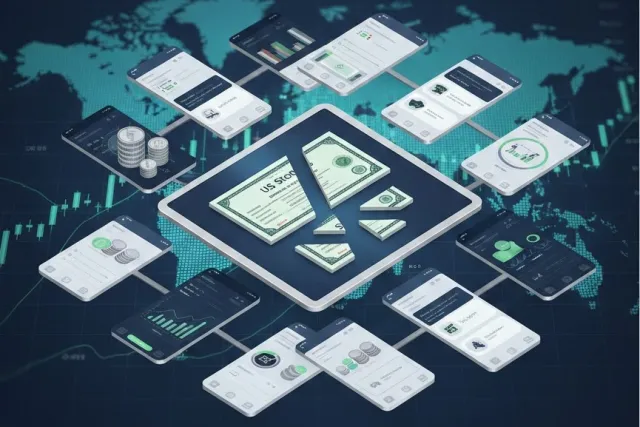
Tokenized US stocks let you gain equity exposure through blockchain-based digital assets, typically backed 1:1 by shares or structured to track prices. They can settle near-instantly and trade 24/7, with some platforms allowing crypto funding alongside traditional payment methods, expanding access for global investors. Below, we profile ToVest’s technology-driven approach and seven established, regulated brokerages that are creating credible pathways into tokenization—plus a practical guide to get started. For fundamentals and strategy primers, explore how tokenization opens new possibilities for investors on ToVest Academy. Note: Availability of tokenized stocks and crypto funding varies by jurisdiction and provider. Always verify current offerings and licensing. Platform snapshot (at a glance) Why tokenized stocks now? Tokenized equities are blockchain-based representations of traditional shares that enable round-the-clock trading and programmable settlement, with providers managing custody and corporate actions on behalf of token holders, per Blockchain.com’s explainer on tokenized stocks. Interest has increased as major exchanges pilot tokenized markets for global users, with Ledger Insights reporting that these exchanges have launched tokenized stocks targeting international access. ToVest: Tokenized US Stocks with Advanced Trading Technology Tokenized US stocks are blockchain-based digital assets that represent ownership in underlying US equities, facilitating 24/7 trading and easier global access. ToVest delivers on that promise through a regulated, production-grade platform built for both crypto-native and traditional investors. What sets ToVest apart: Real-world asset tokenization, end to end: seamless primary issuance support, secondary trading, and transparent on-chain attestations. Low-latency matching and advanced market data: tick-by-tick analytics, pro charting, and institutional-grade APIs to power systematic strategies. Crypto-first funding and custody: deposit and withdraw major crypto and stablecoins with strong wallet security, segregation practices, and continuous proofs. User-centric onboarding: clear KYC flows, portfolio insights, and risk tools designed to make tokenized equity investing intuitive. For in-depth insights into RWA structuring, settlement mechanics, and risk, explore ToVest Academy and the latest market reports on the ToVest blog. Fidelity Investments Fidelity is a household-name broker with $0 commissions on US stocks and ETFs, robust research, and a top-tier mobile experience. It consistently earns praise for order execution quality and client service, with measurable price improvement highlighted in StockBrokers.com’s order execution study. While not crypto-native, Fidelity’s ongoing work in digital asset infrastructure positions it well for investors seeking traditional protections today with a potential bridge to tokenized markets as regulation and product sets expand. Best for: Long-term investors seeking a conservative, regulated platform with strong execution and education, and who want flexibility as tokenization matures. Charles Schwab Schwab offers commission-free online trades for US stocks/ETFs, deep research, and acclaimed trading software—including thinkorswim’s charting, screeners, and earnings tools now fully integrated into the Schwab ecosystem. Its technology stack, pricing, and broad product access make it a strong foundation as the industry shifts toward tokenized and digitally-native rails, offering market-leading trading education and insights for retail and active traders. Platform highlights: thinkorswim desktop/web/mobile, advanced studies, paper trading, and events tools cited in StockBrokers.com’s day trading guide. Tokenization angle: Focused on regulated market structure, with infrastructure that supports evolving client demand for digital assets over time. E*TRADE Now part of Morgan Stanley, E*TRADE blends a user-friendly interface with access to institutional-grade research and trend analytics. It provides $0 stock/ETF commissions and a variety of dashboards for portfolio oversight. Reviews often cite strong tools and education, though some users report inconsistent customer service and occasional technical hiccups, per Forbes Advisor’s Best Online Brokers. Fit: Beginners and advanced users who value Morgan Stanley research and seek a credible, regulated base as tokenization options expand through compliant channels. Interactive Brokers Interactive Brokers (IBKR) is a global powerhouse for multi-asset trading with low margin rates and professional-grade software. Trader Workstation and SmartRouting are designed for best execution and cross-venue price discovery, a combination often recommended for sophisticated traders in Colibri Trader’s review of top platforms. IBKR’s reach across equities, options, futures, forex, and regulated crypto affiliates creates a compelling bridge between traditional markets and tokenized assets as compliant products roll out. Note: IBKR’s full-featured experience skews advanced; newer investors may prefer its simplified web/mobile interface before transitioning to TWS. Robinhood Robinhood popularized commission-free trading with a mobile-first UX, beginner-friendly education, and optional Robinhood Gold for enhanced data and margin. It remains appealing to first-time investors, though customer support has historically received mixed reviews, as summarized in Forbes Advisor’s Best Online Brokers. Robinhood continues to expand its feature set, including crypto trading in eligible jurisdictions, which may complement future tokenization pathways if and when enabled under clear regulations. Best for: New investors seeking frictionless stock trading and bite-sized learning, with interest in digital asset features as they evolve. TradeStation TradeStation caters to active traders who prioritize speed, scripting, and analytics. Its web and desktop platforms offer powerful charting and market-scanning tools, with $0 stock/ETF commissions on select plans and transparent margin analytics. StockBrokers.com’s day trading guide highlights TradeStation’s pro-grade tools for strategy design and execution. Considerations: Deep functionality comes with a learning curve, but the payoff is substantial for systematic and options-driven workflows—useful foundational resources as tokenized assets integrate with traditional order flows. tastytrade tastytrade is designed for options-heavy traders, offering low-cost structures and an innovative “dime buyback” that allows short options to be closed at $0.10 or less without additional commission, per Colibri Trader’s review of top platforms. The platform is well-regarded for education, live content, and a community of advanced users, as reflected in Investopedia’s broker rankings. Trade-offs: Asset selection is narrower than multi-product brokers; it’s ideal if options strategies are your core focus and you prefer straightforward, low-friction pricing. How to Start Trading Tokenized US Stocks with Crypto A practical path, step by step: Registration: Create an account on a regulated provider that supports tokenized US stocks. Verify identity (KYC/AML): Submit ID and proof of address. KYC (Know Your Customer) ensures platforms verify users to prevent illicit activity and secure accounts. Fund with crypto or fiat: Link a crypto wallet to deposit supported coins/stablecoins, or fund via bank transfer/card where crypto is not available. Choose a tokenized US stock: Review the asset’s linkage to the underlying equity and disclosures on custody and corporate actions. Execute the trade: Set order type (market/limit), size, and confirm. Monitor and manage: Track P/L, corporate actions, and adjust positions; withdraw as crypto or fiat per platform rules. Trade flow at a glance Key Features to Consider in Regulated Tokenized Stock Platforms Evaluate platforms on these essentials: Licensing and regulation: Confirm broker-dealer status, ATS/MTF permissions where applicable, and adherence to KYC/AML. Crypto funding and rails: Which cryptocurrencies and stablecoins are supported? What are on/off-ramp fees and limits? Market transparency: Proof of reserves/attestations for token backing; clear corporate action policies; audit trails. Custody and asset security: Segregated accounts, MPC/HSM key management, insurance coverage, and incident response. Data and tools: Real-time depth, advanced charting, API access, and analytics for both discretionary and systematic traders. Costs: Commissions, spreads, routing fees, funding and withdrawal fees, and conversion costs. Support and education: 24/7 support, multilingual coverage, tutorials, and a documented knowledge base. Use this checklist to compare regulated tokenized stock platforms and crypto funding options—then evaluate ToVest and alternatives against your strategy’s speed, data, and custody needs. Frequently Asked Questions What are tokenized US stocks and how do they work? Tokenized US stocks are blockchain-based tokens that mirror traditional shares, enabling 24/7 trading and settlement while tracking the underlying equity’s price, with custody and corporate actions handled by the provider. Are tokenized stock trading platforms regulated? Many are regulated within their jurisdictions; verify licensing (e.g., broker-dealer or ATS), and ensure that KYC/AML and investor protections are in place. Can I trade tokenized US stocks using cryptocurrencies? Yes—certain regulated platforms, including ToVest, support crypto deposits and trading pairs for tokenized stocks; availability depends on your region and the provider. What licenses should a regulated tokenized stock platform have? Look for SEC/FINRA oversight or an ATS in the US; in the EU, MiCA-aligned authorizations and relevant MTF/MTF-equivalents are preferred for investor protection. How do tokenized stocks handle dividends and corporate actions? Platforms or custodians typically process dividends and actions, passing through entitlements to token holders according to their policies and holdings on the record date. Citations: Blockchain.com’s explainer on tokenized stocks; Ledger Insights on exchange tokenization pilots; StockBrokers.com’s order execution and day trading guides; Forbes Advisor’s Best Online Brokers; Colibri Trader’s review of top platforms; Investopedia’s broker rankings.

blog banner

2025年12月2日

Why Gen Z is “Turning Back” to Gold Instead of Crypto & Stocks? 2025 Trend: Safety Takes the Lead

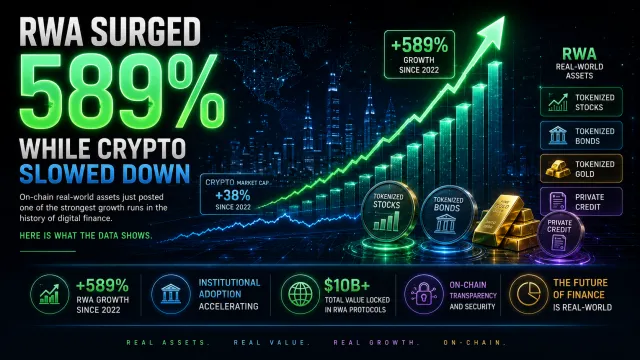
Southeast Asian Gen Z in 2025 is “Rushing” to Buy Gold: Wiser After Risky Shocks Amid a highly volatile financial market – with crypto potentially losing 50–100% in a year (CoinMarketCap 2025) and U.S. stocks easily dropping 15% during recession cycles (S&P 500 data) – Southeast Asian Gen Z (ages 18–35) is making a surprising investment shift: returning to gold. Gold, the “classic” asset, is becoming the most sought-after safe haven. Data from the SEA Youth Investment Survey 2025 (n=12,000) confirms this trend: Capital Preservation is the Top Priority: 68% of Gen Z choose “capital preservation” over high returns (up 25% vs. 2024). Breakthrough Shift: 41% bought gold or gold tokens in the past 12 months (up 120% YoY, Statista SEA 2025). Fear of “Going to Zero”: 87% worry that crypto could lose >50% of its value in 48 hours, as seen with LUNA in 2022. Gen Z is not “conservative”; they are simply becoming smarter and more pragmatic. High returns always come with high risks. With annual volatility of only 8–12% (World Gold Council 2025), gold offers superior stability compared to crypto’s 80–200% swings. 4 Reasons Gen Z Wisely Shifts to Gold SEA Gen Z once led the FOMO crypto trend (76% invested in meme coins, Chain lysis 2021–2023), but 2024–2025 marks a return to caution based on real data: Heavy Losses from Risky Channels Crypto fell an average −65% from its 2021 peak (CoinGecko); stocks fluctuate 20–30% cyclically (Fed data). 71% of Gen Z admit to losing money in crypto (CFA Institute 2024), leading to risk-averse behaviour. Inflation and Economic Uncertainty (Hedging Against Inflation) SEA inflation is 4–6% (World Bank 2025), eroding savings. Gold grows +28% YTD 2025 (Kitco forecast Q4: $3,300/oz), confirming its role as the best inflation hedge. Job Market Uncertainty (Financial Safe Haven) 55% of SEA Gen Z worry about job loss due to AI development (McKinsey 2025). Demand for a financial “safe haven” like gold increased 35% among under-30s (World Gold Council). More Accessible Than Ever: Tokenized Gold (Gold RWA) Traditional barrier: 63% of Gen Z don’t buy physical gold due to bulkiness and theft risk. Modern solution: Gold RWA tokens allow buying 0.01g for ~50,000 VND. Result: SEA Gold RWA token trading volume increased 540% YoY (Tovest internal data Q3 2025) – Gen Z drives this “digital gold” trend. Gold – The Asset Gen Z Trusts Due to 3 “Sustainable” Factors Gold may not be as “sexy” as meme coins, but stability and asset protection are why 78% of SEA Gen Z choose it as their “investment gateway” (Statista 2025). Gen Z does not abandon risk – they choose smart risk. Tokenized Gold (Gold RWA) is the perfect bridge: as safe as physical gold + as flexible as crypto. With gold projected to reach $3,500/oz in 2026 (Goldman Sachs), it’s an ideal long-term investment platform. Will Gold Outperform Crypto in 2025–2026? Gold is not a “fast-wealth king” but is a superior insurance asset in uncertain times. Why Gold Wins as a Hedge: Gold’s price has grown an average 12.8% per year over 5 years (World Gold Council), far exceeding SEA inflation at 4–6%. This provides crucial safety for Gen Z with unstable incomes (53% worry about job loss). Conclusion: Gen Z Invests in Gold for “Practicality,” Not “Classic Style” Gen Z’s return to gold is not about being “old-fashioned” – they’ve learned a key lesson: 63% prioritize safety over risk (SEA Youth Survey 2025). Gold is a financial anchor helping them survive market swings, especially when crypto and stocks can easily “go to zero.” Search Trends Surge (Google Trends & Statista 2025): “Gold investment 2025” Vietnam: +340% YoY “Should I buy gold or crypto”: +280% SEA “Safe assets Gen Z”: +420% (sharp increase from Q2 2025) If early-2020s Gen Z chased “meme” and “hype,” Gen Z in 2025 pursues safety, long-term growth, and transparency through digital gold.

blog banner

2026年1月13日

Interactive Brokers vs Webull: Best Choice for Global Fractional US Stocks

Global investors increasingly want exposure to U.S. equities without tying up large capital in single shares. Fractional shares—buying a portion of a stock or ETF—solve that by letting you invest a dollar amount instead of a whole share, bringing high-priced names within reach. If your goal is fractional U.S. stocks with the option to expand globally, Interactive Brokers (IBKR) and Webull are two of the most popular routes. The short answer: Webull is excellent for mobile-first, U.S.-focused fractional investing; IBKR is the stronger choice if you also need international markets, multi-currency support, and institutional-grade tools. Below, we compare both across access, features, pricing, and ease of use to help you decide. Overview of Fractional Shares and Global Investing Access Fractional shares are partial units of a single stock or ETF, allowing you to buy less than one share in dollar amounts that fit your budget. For global investors, the appeal is clear: fractional shares ease entry into U.S. markets, enable diversification with smaller sums, and support strategies like recurring buys and dollar-cost averaging. Access matters as much as affordability. Cross-border investing introduces currency conversion, regulation, and payment rails that can complicate execution. Platforms that natively support multiple currencies, local funding options, and compliant onboarding for non-U.S. residents remove friction and make it practical to build U.S.-centric portfolios from abroad. As a fintech bridging traditional and digital markets, ToVest emphasizes global accessibility, regulatory compliance, and multi-currency flexibility—including stablecoins—to enhance fractional investing efficiency for sophisticated investors. Interactive Brokers Platform Features and Benefits Interactive Brokers is built for global investors who want robust market access and professional-grade execution. It supports multi-currency accounts and provides access to 150+ markets worldwide, a combination that makes fractional U.S. stock investing easier across borders, currencies, and venues, as summarized in the NextLevelGlobalAcademy overview (IBKR vs peers) NextLevelGlobalAcademy overview. On the technology side, IBKR’s Trader Workstation (TWS) offers more than 100 order types, institutional-grade SmartRouting, and extensive algorithmic options suited to active traders and professionals, according to the Investopedia comparison Investopedia comparison. Its APIs support automation, backtesting, and systematic strategies. IBKR’s international footprint is equally strong. The broker reports a large global client base—over 2 million customers across 200+ countries—which reinforces its suitability for users seeking U.S. exposure plus global diversification Investing.com IBKR review. Beyond equities, IBKR covers mutual funds, options, futures, bonds, forex, and a curated crypto lineup (11 coins via partners), and offers advanced features like portfolio margin for eligible accounts, all within a compliance-first framework StockBrokers.com comparison. Webull Platform Features and Benefits Webull is a mobile-first platform favored by retail traders for its clean UX, fast onboarding, and strong app experience on iOS and Android. It includes paper trading for practice, responsive charting, and up to 59 technical indicators—great for beginners and on-the-go users, as noted in the StockBrokers.com Webull review StockBrokers.com Webull review. Crucially, Webull supports fractional shares of U.S. stocks and ETFs and lets users set recurring investments in small amounts (e.g., starting from $5) up to higher caps suitable for systematic buying StockBrokers.com Webull review. The trade-off is international breadth: while Webull excels in U.S.-listed securities and options, its access to non-U.S. markets and certain asset classes is limited relative to IBKR StockBrokers.com comparison. Market Access and Instrument Availability Comparison The right platform depends on what you plan to own beyond U.S. fractional stocks. Here’s how coverage compares at a glance: Coverage summary IBKR: 150+ global exchanges, multi-currency support, stocks/ETFs (fractional supported), options, futures, bonds, forex, mutual funds, and 11 cryptocurrencies NextLevelGlobalAcademy overview; StockBrokers.com comparison. Webull: Primarily U.S.-listed stocks/ETFs (fractionals supported), options, and 50 cryptocurrencies; no mutual funds and limited international access StockBrokers.com comparison. Trading Tools, Platform Usability, and Technology Advanced workflow (IBKR) Trader Workstation with 100+ order types, SmartRouting, algos. APIs for automation and programmatic trading. Powerful but a steeper learning curve for new investors Investopedia comparison. Mobile-first workflow (Webull) Highly rated iOS/Android apps, quick onboarding, and paper trading. Intuitive charting with up to 59 technical indicators and streamlined order tickets. Recurring fractional buys make long-term accumulation straightforward StockBrokers.com Webull review. Step-by-step: from sign-up to placing a fractional order IBKR Apply with global KYC and select a multi-currency account. 2) Fund via supported methods in your base currency. 3) In TWS or Client Portal, choose an eligible U.S. stock/ETF. 4) Place a fractional order by entering a dollar amount; review routing and preview commission/taxes. 5) Monitor execution with detailed fills and analytics. Webull Open an account in the app with streamlined KYC. 2) Fund via ACH or supported methods. 3) Search a U.S. stock/ETF with fractional support. 4) Select “buy in dollars,” optionally set a recurring schedule. 5) Track orders and performance in the mobile dashboard. Pricing, Fees, and Account Minimums Both brokers offer $0 commissions on U.S. stocks and ETFs at standard retail tiers. IBKR’s Pro tier also offers per-share pricing (e.g., $0.005 per share, $1.00 minimum), which can be advantageous for high-volume or routing-sensitive traders Investopedia comparison. Interactive Brokers Commissions: $0 (Lite) for U.S. stocks/ETFs; IBKR Pro per-share tiers available. Margin: Among the lowest in the industry, especially at higher balances Investopedia comparison. Funding/withdrawals: Multiple global methods; standard bank fees may apply. Account minimums: No minimum for most retail accounts. Webull Commissions: $0 for U.S. stocks/ETFs and options (contract fees may apply). Margin: Competitive but generally higher than IBKR at larger balances Investopedia comparison. Funding/withdrawals: App-first experience; fast ACH for U.S. users. Account minimums: No minimums for cash accounts; streamlined onboarding Unbiased Webull review. Cash Management, Interest, and Banking Features Cash management includes how a brokerage holds your uninvested cash, what interest it pays, and how you move funds in and out. Interactive Brokers: Pays interest on eligible uninvested cash above a threshold (commonly $10,000), with rates linked to benchmarks; it does not bundle FDIC-insured checking/savings accounts NerdWallet IBKR review. Webull: Often advertises competitive cash yields for promotional periods and has run IRA match promotions; it also does not offer FDIC-insured bank accounts as part of the brokerage Unbiased Webull review. Pros and Cons of Interactive Brokers and Webull Interactive Brokers (IBKR) Pros: Vast global market access; multi-currency accounts; advanced tools and SmartRouting; low costs for high-volume trading; broad product coverage including mutual funds and 11 crypto coins StockBrokers.com comparison. Cons: Steeper learning curve; cash interest thresholds; interface complexity for beginners Investing.com IBKR review. Webull Pros: Excellent mobile UX; paper trading; recurring fractional buys from small amounts; no account minimums; wide crypto list (about 50 coins) StockBrokers.com Webull review. Cons: Limited international equity access; no mutual funds; research depth is basic compared to pro platforms StockBrokers.com comparison. Which Platform Is Best for Global Investors in Fractional US Stocks? If you want easy, mobile-first access to fractional U.S. stocks and ETFs, Webull is a strong fit. If you need global diversification, multi-currency funding, and professional tools alongside U.S. fractional investing, Interactive Brokers is the better choice. Independent comparisons consistently frame IBKR as the choice for multi-market access and advanced execution, while Webull excels in user-friendly U.S. trading with robust mobile features BrokerChooser comparison. Bottom line: For most global investors focused on fractional U.S. stocks with room to expand internationally, IBKR’s breadth and infrastructure are hard to beat. For crypto-centric users who value a wider coin roster and a streamlined app, Webull may be preferable. As the market converges with digital assets, solutions like ToVest aim to further reduce cross-border friction by enabling compliant, tokenized access to U.S. equities and multi-currency workflows, including stablecoins ToVest about. Frequently asked questions What are fractional shares and why are they important for global investors? Fractional shares let you buy part of a stock or ETF by dollar amount, making high-priced U.S. equities accessible and enabling diversified portfolios with smaller capital. How can investors buy fractional shares on brokerage platforms? Choose a broker that supports fractional trading and place an order by dollar amount (or fraction) on eligible U.S. stocks/ETFs. What factors should investors consider when choosing a platform for fractional US stocks? Prioritize global access, platform usability, product range, fees, cash features, and account minimums. Do fractional shares offer dividends and voting rights? Dividends are typically paid proportionally, but voting rights on fractional positions vary by broker and may be limited. How do fees and account minimums impact fractional share investing? Lower fees and no minimums reduce friction, allowing efficient U.S. market access even with small recurring investments.

blog banner
;
ブログ | ToVest