December 15, 2025

What is MSB that 99% of Vietnamese traders are looking for a trading platform with this license?

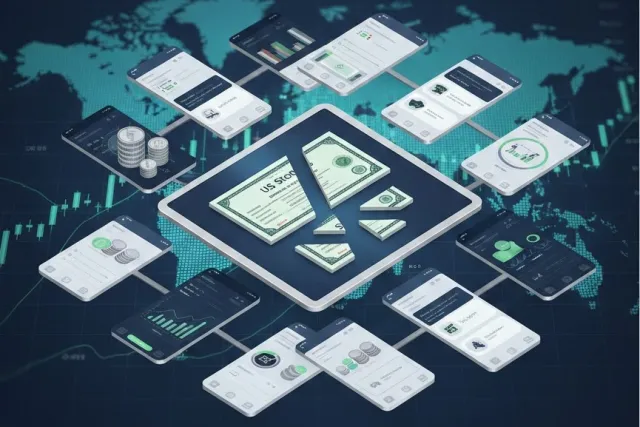
The “No MSB, No Deposit” Rule – The Binding Standard of Vietnamese Traders in 2025 (Main Entity: No MSB No Deposit Rule – Vietnamese Trading Community 2025) Executive Summary Since Q4 2024, the Vietnamese trading community has firmly established an uncompromising principle: “No valid FinCEN Money Services Business (MSB) registration → No deposit of any amount.” This is not a passing trend but a community-enforced rule born from painful lessons of multiple platform failures and total capital losses (e.g., FXMargiela, RoyalCM, DNA Markets, Hankotrade collapses in 2023–2024). I. What Is MSB? A Mandatory U.S. Regulatory Registration, Not a Marketing “License” "A detailed table providing Official FinCEN details (Updated 2025) on the Money Services Business (MSB) Registration. It outlines the Legal Nature (mandatory for entities handling customer funds involving U.S. financial pipelines), the Issuing Authority (FinCEN – U.S. Department of the Treasury), the Registration Deadline (180 days), and potential Penalties for Non-Compliance (fines up to $250,000 per day + up to 5 years imprisonment)." II. Real-World Data Proving “No MSB = Extremely High Risk” (2023–2025) "This data set covers two main areas: RWA Investment and Safety. It includes an analysis of the Most Liquid Tokenized Asset Platforms in 2025 and a guide on Buying US Stocks with Crypto. Crucially, it details the mandatory FinCEN MSB Registration for financial entities and provides statistics on rising financial losses incurred by Vietnamese traders on unregulated brokers from 2023 to 2025." → 100% of platforms blacklisted by the Vietnamese community between 2023 and 2025 either lacked a valid MSB registration or had it revoked. III. Conclusion & Official Checklist Adopted by Vietnamese Traders in 2025 FinCEN MSB registration is not an “elite license” but the minimum legal requirement for any broker handling client funds linked to the U.S. financial system. Vietnamese traders now follow this strict 3-step verification process before depositing: Visit https://www.fincen.gov/msb-registrant-search and search for the broker’s legal entity name or parent company. Confirm “Active” status and a valid MSB Registration Number (typically format 30xxxxxxxxxx). Cross-check the displayed MSB number on the broker’s official website. No valid MSB found → No deposit → No exceptions. The “No MSB, No Deposit” rule has become the de facto standard for over 1.2 million Vietnamese traders in 2025 and is uniformly enforced across major communities (TraderViet, CafeF, Investing Vietnam groups, and Telegram channels). II. The Vietnamese Market Sensitivity: Why Accountability Matters Most Vietnamese traders are uniquely sensitive to platform risk, a vigilance forged by adverse past market cycles and platform misconduct. The priority is capital preservation over hypothetical yield. A. The Cost of Lack of Accountability (Offshore platform collapses, How to verify a trading platform) The shift in mindset is driven by repeated negative historical events: Offshore platforms collapsing overnight. Unexplained withdrawal freezes with zero legal recourse. Anonymous operators dissolving their online presence. The critical lesson learned is: Yield means nothing if the platform has no legal footprint. MSB answers the crucial question: “If something goes wrong, is there a real, legally traceable entity behind this platform?” III. Operational Obligations: MSB Enforces Traceability and Compliance MSB registration imposes significant operational duties that effectively force accountability onto the registered entity. A. Key Compliance Requirements (AML program MSB, FinCEN record retention) Maintaining MSB status requires adherence to strict compliance requirements: Mandatory Company Identity Disclosure to FinCEN. Implementation of a rigorous AML (Anti-Money Laundering) Program. Continuous Transaction Monitoring & Reporting obligations. Mandatory Record Retention obligations. B. The Result: Operations That Cannot Vanish These obligations ensure the platform: Cannot handle client funds arbitrarily. Has legally traceable operations. Cannot simply "disappear" without triggering severe regulatory and legal consequences. IV. Crucial Distinction: What MSB Does NOT Protect Users From It is vital for traders to understand the scope of MSB regulation: MSB does NOT guarantee profits or eliminate market risk. MSB does NOT protect against poor personal trading decisions. Conclusion: MSB addresses Platform Legitimacy and Accountability, not trading Performance. Experienced traders recognize this distinction, using MSB purely as a safety filter for their capital. V. The Spreading of the “MSB-First Mindset” Vietnamese trading communities have fundamentally re-ordered their platform evaluation priorities, pushing Yield to the bottom: Legal Existence (MSB or Equivalent) Transparency of Operations Risk Model Yield Potential This prioritization explains why highly incentivized but unregistered platforms struggle to retain capital, while compliance-first platforms are achieving slower but more sustainable growth by prioritizing trust over hype. VI. MSB: No Longer a Differentiator — It’s a Mandatory Filter The key mindset shift is that MSB has transitioned from a premium feature to a basic screening requirement: Having MSB does not make a platform special. Not having MSB makes a platform suspicious. MSB is now viewed as: A company registration. A verifiable legal address. A minimum requirement to be taken seriously by long-term, risk-averse traders. Final Takeaway (Best regulated trading platforms 2025): Vietnamese traders are prioritizing capital preservation and regulatory clarity. They are choosing platforms that: Exist legally, can be held accountable, and are built to survive multiple market cycles. MSB does not make a platform profitable — but without MSB, a platform is not worth trusting.

blog banner

January 5, 2026

Invest in Real‑World Assets Today – Top RWA Platforms for 2026

Real‑world assets (RWAs) are tangible or financial assets—such as real estate, bonds, commodities, and even U.S. equities—converted into digital tokens recorded on a blockchain. Tokenization makes ownership and transfer simpler, cheaper, and more liquid, opening markets that were once hard to access. In 2026, the RWA market is accelerating as regulations clarify, compliance tooling matures, and institutions deepen participation—broadening retail access worldwide, according to industry outlooks for the year ahead (see Blockchain App Factory’s 2026 perspective). These shifts make it an opportune time to assess the best platforms for secure, diversified RWA investing and to understand how blockchain infrastructure is transforming market efficiency and access. ToVest: Leading Blockchain-Powered RWA Investment Platform ToVest is built to remove historical barriers to premium U.S. assets by offering compliant access to tokenized U.S. stocks and real estate through a streamlined blockchain investment platform. Investors can buy fractional stakes, employ advanced trading tools like margin and leverage, and manage portfolios with transparent, real‑time reporting. We combine round‑the‑clock trading and institutional‑grade security with user‑friendly onboarding for individuals and institutions alike—delivering fractional investing and deep liquidity without compromising regulatory rigor. Explore how we approach regulated, global access to tokenized markets on the ToVest Academy. Securitize Securitize stands out as a compliance‑first market leader in tokenized securities with end‑to‑end issuance, investor onboarding, and secondary trading. Independent research highlights its adoption: more than $1B tokenized, a 1.2M‑strong investor base, and 3,000+ clients—a scale that sets the benchmark for 2026 (Suffescom’s review of top tokenization companies). Its strengths include regulated workflows (KYC/AML and transfer restrictions), a vertically integrated secondary venue, and robust infrastructure tailored for institutions. Comparison snapshot: Ondo Finance Ondo Finance packages traditional fixed‑income into on‑chain products, making it easier for professional and institutional investors to hold diversified credit and bond exposure with blockchain‑native settlement. A tokenized bond is a digital representation of a fixed‑income instrument whose ownership, transfer, and coupon distributions occur on‑chain, enabling faster settlement and programmable compliance. Use cases span asset managers seeking operational efficiency, corporate treasuries aiming to optimize yield with liquidity, and DeFi participants who want safer base yields (CoinEdition’s 2026 tokenization roundup). Centrifuge Centrifuge channels DeFi liquidity into real‑world cash flows by tokenizing invoices, receivables, and SME loans—an approach that expands financing for businesses while giving investors diversified yield exposure to tangible, short‑duration assets. This is SME asset tokenization at work: turning real business obligations into investable on‑chain pools with transparent performance metrics (RWA.io’s platform overview). How users engage: Sign up and complete KYC/AML. Review pools backed by real‑world assets (e.g., invoices, receivables). Select allocations aligned to risk/tenor preferences. Monitor performance and claim yield on‑chain. RealT RealT is a retail‑friendly entry point to U.S. real estate, offering property‑specific tokens that pay rental income on‑chain—simple onboarding and low minimums make it accessible to everyday investors (Bitcoin Chaser’s RWA platform guide). Fractional ownership means splitting a single property into many tradable shares, so investors can buy small portions and receive proportional rental distributions. Maple Finance Maple Finance operates an on‑chain private credit marketplace, connecting vetted borrowers with lenders via transparent pools backed by real‑world collateral. Lenders can choose among risk profiles, review programmatic terms, and monitor ongoing performance. Maple’s core benefits for institutions include auditable loan data, diversified pool offerings, and compliance layers aligned with enterprise requirements (Security Tokenizer’s 2026 platform analysis). Polymath / Polymesh Polymath pioneered security token tooling on Ethereum (notably ERC‑1400) and now powers Polymesh, a layer‑1 blockchain purpose‑built for regulated digital assets and capital markets operations. A security token is a blockchain‑based representation of a regulated financial instrument (equity, debt, fund interests), and KYC/AML automation applies identity and jurisdictional checks programmatically to enable compliant transfers. Their strengths: jurisdiction‑aware compliance, enforced transfer restrictions, and workflow automation that can streamline legal processes for issuers (Tokeny’s ecosystem mapping of RWA/tokenization infrastructure). Tokeny Tokeny provides compliance‑centric SaaS for institutions and enterprises to issue, manage, and transfer regulated tokens with automated checks, granular permissions, and clear audit trails. Their transfer modules emphasize real‑time visibility and control—capabilities increasingly sought in 2026 as investors demand transparent books and compliant distribution logic (Webisoft’s RWA tokenization guide). For enterprises prioritizing governance and reporting fidelity, Tokeny’s framework is a strong fit versus purely retail offerings. YieldBricks / Realio YieldBricks and Realio are next‑gen platforms marrying property tokenization with programmable yields and enhanced secondary liquidity. YieldBricks focuses on global real estate, often layering DeFi‑style yield mechanics on top of asset income, while Realio prioritizes compliant secondary market access for real estate and income fund tokens. Unique features can include automated rebalancing across portfolios and programmable distributions that align payouts with cash‑flow timing (OpenRWA’s ecosystem listings). Safeheron / Antier Solutions Safeheron and Antier Solutions sit in the infrastructure layer, helping issuers and platforms deploy multi‑asset tokenization infrastructure with enterprise‑grade custody, security, and flexible issuance models. Multi‑asset tokenization infrastructure refers to the end‑to‑end stack—issuance, identity, custody, transfer, and reporting—abstracted to support many asset types under unified policy controls. Expect capabilities like real‑time auditability of reserves and customizable security frameworks demanded by institutions (Changelly’s explainer on the RWA stack and custody considerations). Swarm Markets / TrueFi Swarm Markets and TrueFi represent regulated DeFi venues for on‑chain trading and lending of tokenized securities and credit. Swarm focuses on compliant tokenization and secondary trading of regulated assets; TrueFi offers infrastructure for tokenized credit with permissioned liquidity pools and transparent borrower performance. As RWAs mature, regulated venues that fuse DeFi mechanics with compliance will be essential to scaling institutional participation (Lightspark’s overview of why RWAs matter). How to Choose the Best RWA Platform for Your Investment Goals Key decision checklist: Regulatory posture: licensing, KYC/AML, and transfer restrictions. Custody and security: MPC, audits, proofs of reserves, and insurance. Secondary market access: liquidity venues, settlement times, and spreads. Fees: issuance, trading, custody, and redemption costs. Interoperability: bridges and standards to reduce vendor lock‑in. Asset expertise: track record with the asset class you want (equities, real estate, credit). Data transparency: real‑time reporting, attestations, and on‑chain auditability. Cross‑chain interoperability means tokens can move or be recognized across different blockchains with consistent identity and compliance states—now a practical priority as institutions evaluate portability and vendor risk (Huma’s analysis of the RWA stack’s evolution). Quick comparison by investor fit: Benefits of Investing in Real-World Assets Through Tokenization Accessibility: Fractional investing lowers minimums and broadens participation in high‑value assets. Liquidity: Secondary trading enables faster exits and more frequent price discovery. Transparency: On‑chain records support real‑time auditability and standardized reporting. Yield from tangible activity: Investors can access income streams tied to real economic output (Blockchain App Factory’s 2026 outlook). “Tokenization enables programmable dividends and automated rebalancing via smart contracts,” a defining advantage as issuers bring traditional income strategies on‑chain (LinkedIn’s 2026 RWA trends brief). To get started with a streamlined experience across tokenized U.S. stocks and real estate, consider ToVest Academy’s practical overview. Key Considerations and Risks When Investing in RWAs Understand these risks before allocating: Legal and regulatory: Rules vary by jurisdiction and are evolving; strong legal frameworks are becoming competitive advantages rather than barriers (Investax’s primer on RWA tokenization). Operational/platform: Smart‑contract bugs, custody lapses, or governance failures can impair access or value. Market/valuation: Interest‑rate moves, tenant risk, or credit events can affect prices and yields. Counterparty: Ensure assets are properly originated, serviced, and verifiably backed. Risk quick guide: Frequently Asked Questions About Real-World Asset Investments What are real-world assets and why invest in them? Real‑world assets are traditional assets represented as tokens on a blockchain, offering greater access, transparency, and potential yield linked to physical or financial cash flows. How does tokenization enable fractional ownership? Tokenization divides an asset into many small, tradable units, allowing investors to purchase fractions instead of the whole asset. What types of real-world assets can be tokenized? U.S. stocks, real estate, bonds, commodities, intellectual property, revenue streams, and private credit can all be tokenized. What are the main risks involved in RWA investing? Key risks include regulatory changes, platform or custody failures, market volatility, and ensuring assets are genuinely and verifiably backed. How can investors start investing in tokenized real-world assets? Open an account with a regulated RWA platform like ToVest, complete KYC, and allocate to tokenized assets that match your goals and risk tolerance.

blog banner

January 2, 2026

7 Ways Crypto Wallets Unlock Tokenized Asset Investing in 2026

Tokenized assets are moving from concept to core portfolio building blocks in 2026—and yes, you can use crypto wallets to invest in them. By converting ownership rights in stocks, real estate, and other assets into blockchain tokens, investors gain fractional access, 24/7 liquidity, and near-instant settlement. Modern wallets don’t just store tokens; they connect you to compliant issuance, secondary markets, DeFi tools, and tax reporting all in one place. As regulators reiterate that tokenized securities remain securities, global platforms and wallet providers have responded with built-in identity, security, and reporting. The upshot: crypto wallets now function as secure, compliant gateways to diversified, cross-border investing in tokenized equities and institutional-grade real estate—on ToVest and beyond. ToVest: Blockchain platform for tokenized asset investing ToVest’s mission is straightforward: make institutional-quality assets universally accessible. The platform unifies tokenized U.S. equities and institutional-grade real estate in a single account, with around-the-clock trading, real-time settlement, and robust compliance designed for both retail and institutional investors. Tokenized assets are digital tokens on a blockchain representing ownership rights in real-world securities, real estate, or commodities, enabling fractional ownership, instant transfer, and programmable compliance. On ToVest, stablecoins like USDT and USDC streamline funding and settlement, while real-time market data and portfolio tools help investors rebalance across sectors in seconds. This cross-sector diversification—combining tokenized stocks with stabilized real estate—reduces concentration risk and enhances liquidity compared with traditional private markets, a benefit widely highlighted in discussions about tokenization’s advantages for investors, such as increased liquidity and fractional ownership accessibility backed by on-chain settlement finality. ToVest’s security stack and compliance workflows rival traditional broker-dealers, yet its wallet compatibility and 24/7 market access reflect a crypto-native experience. Connect a compatible wallet, fund with stablecoins or fiat, and allocate across tokenized asset classes on a unified, regulated platform. Self-custody with institutional-grade security Self-custody allows investors to directly hold their digital assets, typically via a personal wallet, rather than relying on a third-party custodian—offering maximum security and independence. For high-net-worth and institutional users, modern self-custody tools combine hardware isolation, audited firmware, and policy controls that match enterprise standards. Hardware wallets such as Ledger and Trezor isolate keys in Secure Elements with on-device confirmation and open-source (or auditable) firmware. Industry reviewers consistently describe hardware wallets as the “gold standard” for protecting keys, with Ledger devices ranging roughly $79–$399 and Trezor’s lineup starting near $49 for Model One and about $169 for higher-end models, according to independent buyer guides from NerdWallet and Forbes. MPC (multi-party computation) wallets like Zengo remove single-point seed phrases and shard key material, a model highlighted by software wallet analyses that also emphasize broad asset support and recovery options [Investopedia’s software wallet guide]. Comparison snapshot (2026): No single approach fits all. Long-term, high-value holdings generally favor hardware isolation, while MPC wallets offer strong theft protection and smoother recovery for active traders. Native multi-chain and Layer-2 asset access Multi-chain access allows a wallet to support tokens and dApps across multiple blockchains, eliminating the need to juggle different apps and boosting investing convenience. In 2026, tokenized securities are proliferating across Ethereum mainnet, Layer-2s like Arbitrum, Base, and Polygon, and ecosystems like Solana, BNB Chain, and Cosmos/IBC. Wallets such as MetaMask and Trust Wallet provide unified interfaces for thousands of assets across these networks, a capability front-and-center in Trust Wallet’s guidance on real-world asset support. Many leading wallets now offer native Layer-2 support and easy custom network configuration; Ledger Live and Phantom excel in multi-chain asset display and signing flows, while still enforcing device-level confirmations. At-a-glance support (indicative, 2026): Support varies by version and region; always confirm chain coverage for specific tokenized offerings. Integrated DeFi composability for liquidity and yields Composability in DeFi means assets and protocols can interoperate, allowing investors to lend, stake, or swap their tokens within one wallet environment. Wallets like MetaMask, XDEFI, and Atomic Wallet embed swap aggregators and DEX routing so investors can rebalance or source liquidity without leaving the app, a pattern documented in wallet feature rundowns that compare built-in exchange integrations [Kryptos’ wallet comparison]. For institutions, composability is part of why major asset managers foresee tokenization reshaping operating models through streamlined settlement and on-chain lifecycle events. Practical yield paths (illustrative): Tokenized real estate: Connect your wallet to a compliant on-chain vault; review disclosures; approve access; stake the tokenized property receipts to earn rental-income distributions; monitor yield and withdraw anytime subject to lockups. Tokenized equities: Allocate to a liquidity pool paired with stablecoins for market-making fees or lend tokenized shares in a permissioned pool with automated margin and recall conditions. Both: Utilize wallet-embedded swap aggregators to rebalance between sectors, maintaining target allocations with minimal slippage. Always verify eligibility, lockups, and transfer restrictions embedded in the token’s compliance rules before deploying assets. Built-in identity verification and compliance features KYC and AML processes verify an investor’s identity and prevent illicit activity—requirements becoming standard for investment wallets handling tokenized securities. As regulators have emphasized that tokenized securities are still securities, onboarding increasingly includes identity attestations and whitelisting tied to the wallet address [Reuters coverage of SEC stance]. Issuers and platforms use on-chain compliance frameworks to restrict transfers to verified addresses and jurisdictions, aligning with risk and reward guidelines for tokenized investments that stress regulatory clarity and custody safeguards. Wallet-based KYC also reduces friction for primary sales. Guidance for participating in digital asset offerings typically specifies compatible wallets and identity steps before allocation—streamlining access across geographies. Common wallet-aligned compliance features: Identity attestations bound to wallet addresses Whitelisting and jurisdictional/geofencing controls Spend/transfer limits and velocity checks Threshold-based reporting and Travel Rule data exchange Programmable lockups and restricted transfer rules on tokens Streamlined secondary trading and fiat on-ramps Secondary trading is the buying and selling of assets on markets after their initial issuance; in tokenized markets, wallets facilitate instant, direct trades. Today’s wallets integrate swap routers, exchange partners, and card/bank on-ramps so investors can deposit, trade, and withdraw with minimal friction. MetaMask, for instance, embeds buy flows and swaps via regulated providers, while other leading wallets integrate exchange features directly within the interface. Roundups of top wallets in 2026 also emphasize the growing presence of compliant on/off-ramps and direct payment rails inside wallet apps . Notably, tokenized equity trading has faced periods of regulatory scrutiny on centralized venues, reminding investors to favor platforms with clear licensing and disclosures. On-/off-ramp and trading support (indicative, 2026): Availability varies by jurisdiction and provider. User-friendly custody and key recovery solutions Wallet recovery mechanisms allow investors to regain access to their assets if devices are lost or passwords forgotten, which is vital for minimizing risk. 2026 wallets emphasize accessible, secure recovery so retail users can safely hold tokenized assets without deep technical knowledge. MPC wallets like Zengo offer seedless recovery with multi-factor authentication, while mainstream apps such as Trust Wallet support encrypted cloud backups and social/redundant recovery options—approaches highlighted in software wallet evaluations that compare usability and security trade-offs [Investopedia’s wallet guide]. Hardware devices complement this with recovery phrases and optional Shamir backups documented in buyer guides [NerdWallet’s wallet roundup]. Common recovery features: 12/24-word recovery phrase (hardware/software) Redundant device recovery and Shamir secret sharing (select hardware) Email/social or biometric verification for MPC recovery Hardware-software pairing for layered access policies These advances are key to onboarding the next wave of tokenized asset investors without compromising private-key protection. Auditability and tax reporting integrations Auditability means that transactions can be transparently tracked and verified, helping ensure accountability and simplifying reporting for compliance and taxes. Leading wallets now surface categorized histories, export CSVs, and connect directly to tax software—features increasingly important for regulated tokenized asset trading. Feature reviews of 2026-ready wallets note tighter integrations with reporting tools and enterprise-grade policy controls, indicating that wallet UX is converging with institutional back-office needs. Issuers and platforms also rely on on-chain provenance for lifecycle events and cap-table accuracy, aligning with best-practice compliance workflows. Audit and tax checklist (what to look for): Complete transaction history with cost basis snapshots CSV/PDF exports and tax-lot selection methods Direct integrations with tax prep software On-chain provenance links and receipt hashes Address-level labeling and notes for attestations Frequently asked questions What are tokenized assets and how do they benefit portfolios? Tokenized assets are digital representations of real-world assets like stocks or real estate on a blockchain, enabling fractional ownership, higher liquidity, and instant settlement—useful for diversification and agile rebalancing. How do crypto wallets enable direct investing in tokenized assets? Wallets serve as the access key to token issuance, secondary markets, and DeFi, allowing investors to buy, hold, and trade tokenized assets across chains while maintaining full control. What security measures protect tokenized asset holdings in wallets? Top wallets combine hardware isolation or MPC key-sharing with on-device confirmations, audited firmware, and policy controls to reduce the risk of theft and unauthorized access. How do wallets simplify compliance and regulatory requirements? Many wallets now support identity attestations, whitelisting, and transaction controls that align with KYC/AML expectations for tokenized securities, streamlining the onboarding process. Can retail investors easily use wallets for tokenized real estate and stocks? Yes. User-friendly interfaces, recovery options, and multi-chain support make leading wallets accessible for retail investors seeking tokenized real estate and equities.

blog banner
Report - Blog | ToVest